

There is no single magic number. The figure buyers hear most often is around 5,000 hours, but the people who actually service these machines put the first major wear closer to 4,000 hours of typical use, and a hard-run rig can be finished at 2,500. Hours are a proxy, not a verdict. Machine class, the kind of work the rig did, and its maintenance history together decide whether a used directional drill is "high hours" or "still has plenty of life."
"How many hours is too many" is the first question almost every used HDD buyer asks, and it is the wrong one. Or rather, it is the right question with the wrong expectation: people want a single number that disqualifies a machine, and no such number exists. A meter reading is one input. By itself it cannot tell you whether the rig in front of you is a bargain or a money pit.
The framework that actually works is simple to state and harder to apply: hours, application, maintenance, and class together determine condition. Change any one of those variables and the same hour count means something completely different. This article walks through each, gives you the class-by-class numbers buyers come here for, and shows you the math that turns a scary hour reading into a negotiating position.
The hours buyers ask about, class by class
Here is the answer most readers came for, before the framework discussion. These are working ranges for a typically maintained machine in typical use. Treat them as a starting point, not a pass/fail line.
| Class (examples) | Typical use | "Normal" hours | "High" starts around | Major rebuild typically at |
|---|---|---|---|---|
| Mini / micro D9x13, D10x15, JT10, JT20 | Fiber/telecom, residential utility | 500 to 2,500 | 3,000+ | 2,500 to 3,500 |
| Utility mid D20x22, D23x30, D24x40, JT24, JT25 | Mixed utility: power, water, fiber | 1,500 to 4,000 | 4,500 to 5,000 | 4,000 to 5,000 |
| Mid-heavy D36x50, JT30, JT40 | Larger utility, small infrastructure | 2,000 to 5,500 | 6,000+ | 5,000 to 6,000 |
| Heavy D60x90, JT4020 / Mach 1 | Infrastructure, gas main, large crossings | 3,000 to 8,000 | 8,000 to 10,000 | 6,000 to 8,000 |
Read this before you use the table
These ranges describe a typically maintained machine doing typical work. A neglected mini that pushed hard pullback in cobble every bore can be at the end of its life at 2,000 hours. A meticulously maintained heavy rig in moderate gas-distribution work can run past 10,000 hours before a significant rebuild. The table sets expectations. The rest of this article tells you how to adjust them for the machine in front of you.
The "5,000-hour rule," and why it is only half true
The most-cited number in the used HDD market is "5,000 hours." It is the figure a buyer is most likely to be handed by a friend, a forum post, or a salesperson. It is a useful rough midpoint, and it is also the source of more bad decisions than any other number in this business, because people remember the round number and forget the conditions attached to it.
Listen to someone who actually services these machines. Richard Levings, of the Ditch Witch organization, put it plainly in a buyer's-guide interview:
"Don't buy a drill with 4,000 hours and expect it to run like new. Major components will begin to wear out at that level."
And, separately: "Usually, contractors are starting to trade in machines at those hours because maintenance costs are beginning to rise. But be aware, you can see some drills at 2,500 hours that are completely worn out."
Richard Levings, Ditch Witch, in ForConstructionPros, "Should You Buy New or Used?"
Notice the number is 4,000, not 5,000. The published industry figures land in the same place. In an Equipment World lifecycle analysis, Vermeer's trenchless service team (Bob Evans and Ryan Erger) put the average useful life of a 36,000-pound-class drill at roughly 4,000 hours before the first major components need attention, and noted that good maintenance and timely rebuilds can stretch that to 12,000 to 14,000 hours, essentially tripling the machine's working life. So the honest version of the rule is: somewhere around 4,000 to 5,000 hours of ordinary utility work, the first big bills start to come due, and disciplined maintenance can push that horizon out dramatically.
What the rule gets right
For a properly maintained utility-mid machine in moderate work, the 4,000-to-5,000-hour band is approximately when the first major rebuilds become probable: a hydraulic pump or motor, carriage component renewal, possibly engine top-end work. As a planning anchor for that one class, it is reasonable.
What the rule gets dangerously wrong
- It is blind to class. A mini-class machine at 5,000 hours is past its expected service life. A heavy-class machine at 5,000 hours has years of work left. Same number, opposite verdict.
- It is blind to application. Five thousand hours of short, light fiber bores in sandy soil is a different machine than 5,000 hours of long, high-pullback gas-main work in clay and rock.
- It is blind to maintenance. A 5,000-hour machine with documented dealer service is a different proposition than a 5,000-hour machine with a hand-written notebook missing two years.
- People only remember the first half. Most buyers latch onto "5,000 hours" and forget the "completely worn out at 2,500" half of the very same warning, which is the half that tells you hours alone settle nothing.
The rule worth carrying is not a number. It is this: hours times application times maintenance times class equals condition. No single variable tells the story.
Once the hours math points you at a machine worth pursuing, the next step is inspecting the actual rig. Our used directional drill inspection checklist is the 9-system sequence we run on every machine we accept into inventory.
Why application matters more than the meter
This is the single most overlooked factor in used HDD evaluation. A 3,000-hour fiber rig and a 3,000-hour gas-main rig are not the same machine, even at the identical hour reading, because they did not do the same kind of work. As Vermeer's own used-buying guidance notes, machine hours have to be read in the context of the machine's size and duty, and a small unit with high hours is generally less favorable than a larger drill at the same hours.
Fiber and telecom: the easier hours
- Short bores, often 100 to 600 feet
- Light pullback loads, frequently under 5,000 pounds
- Residential routes and softer, sandy soils
- Many short cycles per day, which is gentle on hydraulics and the drill string but, on a Tier 4 machine, can drive up DPF regeneration stress (more on that below)
As a rule of thumb, fiber hours are easier hours on the bore-critical systems. A fiber rig at a given hour count usually has more mechanical life left than the meter suggests.
Mixed utility (power, water, gas distribution): the baseline
- Variable bore length, 200 to 1,000-plus feet
- Mixed pullback loads, commonly 5,000 to 25,000 pounds
- Variable soil: clay, sand, the occasional cobble
This is the duty cycle the hours-by-class table is calibrated to. Utility hours are roughly "normal" hours.
Gas main, oil-and-gas, and large crossings: the hard hours
- Long bores, often 1,000 to 3,000-plus feet
- High pullback loads, 25,000 to 60,000-plus pounds on heavy-class rigs
- Abrasive, consolidated ground and occasional rock
- The drill string, hydraulics, and mud pump all take meaningfully more wear per hour
Hard-application hours age a machine faster than the meter shows. A heavy rig that lived on long, high-pullback pipeline work deserves a more skeptical inspection at any given hour count than one that did distribution work. Brand and model wear patterns matter here too; our Ditch Witch vs Vermeer comparison covers the component-level gotchas operators report on each brand.
How to tell what application a rig actually did
- Ask the seller, and if you can, the prior operator. Note any reluctance to answer.
- Read the drill string. Heavy thread wear and uniform outside-diameter reduction point to high-pullback work; light, even wear suggests fiber duty.
- Check the mud pump. Heavily scored pistons and abrasive scale indicate gritty, abrasive-soil work.
- Look at where the rig worked. City distribution territory suggests utility duty; pipeline corridors suggest oil-and-gas.
- Pull the machine's data for a usage profile, covered in the telematics section below.
What wears out, and what it actually costs to fix
If a machine is past a rebuild milestone, the real question is not "is it too many hours." It is "does the asking price reflect the rebuild it is about to need." To answer that, you need a sense of what the work costs.
The one confirmed published anchor (2009 dollars)
The only public rebuild figures with a named OEM source come from the Equipment World lifecycle analysis above, citing Vermeer's trenchless service team for a 36,000-pound-class machine. They are roughly fifteen years old, so treat them as a baseline anchor, not a current quote.
| Item | Hour milestone | Cost (approx. 2009 dollars) |
|---|---|---|
| Engine rebuild | ~8,000 hours | ~$9,500 |
| Hydraulic system overhaul | ~8,000 hours | ~$23,000 |
| Undercarriage | ~8,000 hours | ~$20,000 to $25,000 |
Source: Equipment World, "Owning and Operating Costs" (2009), citing Bob Evans and Ryan Erger of Vermeer's trenchless service team. These are roughly 2009 dollars on a heavy-ish utility machine. Expect today's figures to run higher with parts and labor inflation, and the undercarriage figure in particular scales with machine size, so it does not transfer to a mini or small utility rig.
Class-scaled planning ranges (current, estimate only)
| Class | Milestone | Typical rebuild items | Planning range |
|---|---|---|---|
| Mini / micro | 2,500 to 3,500 | Hydraulic pump; engine top-end; JT20 rack-and-pinion; carriage / gearbox | Pump $4 to 8K; engine $5 to 10K; JT20 rack $2.5 to 5K; carriage $3 to 7K |
| Utility mid | 4,000 to 5,000 | Hydraulic pump; engine rebuild; carriage, vise dies, encoder | Pump $8 to 15K; engine $10 to 18K |
| Mid-heavy | 5,000 to 6,000 | Hydraulic system; engine; gearbox; tracks and sprockets | Hydraulic system $18 to 28K; engine $15 to 25K; gearbox $8 to 15K |
| Heavy | 6,000 to 8,000 | Pump rebuild; larger engine overhaul; full hydraulic system | Pump $15 to 20K; engine $25 to 50K+; full hydraulic $35 to 60K+ |
These figures are planning ranges assembled from analogous heavy-equipment rebuild costs, not confirmed HDD repair invoices. Actual cost varies widely by model, engine make, wear, parts availability, and labor market, and any real decision should be based on a written quote from a Ditch Witch, Vermeer, or independent dealer for your specific machine.
The negotiation math
Turn the rebuild estimate into a number you can use at the table: estimated rebuild cost in the next 12 months, divided by the asking price, is your discount target. A $15,000 pump rebuild looming on a $120,000 utility-mid machine means your real cost is $135,000. If the seller is asking $100,000, the math may work in your favor. If they are asking $130,000 for a machine about to need that work, walk. Buyers who run this calculation negotiate from strength. Buyers who fixate on the hour number pay retail for a rebuild they did not budget for.
Browse used directional drills with documented hour and maintenance history: all current inventory, or by brand, Ditch Witch and Vermeer. Financing is available; see financing options for used HDD equipment.
Lower-hour drills available today
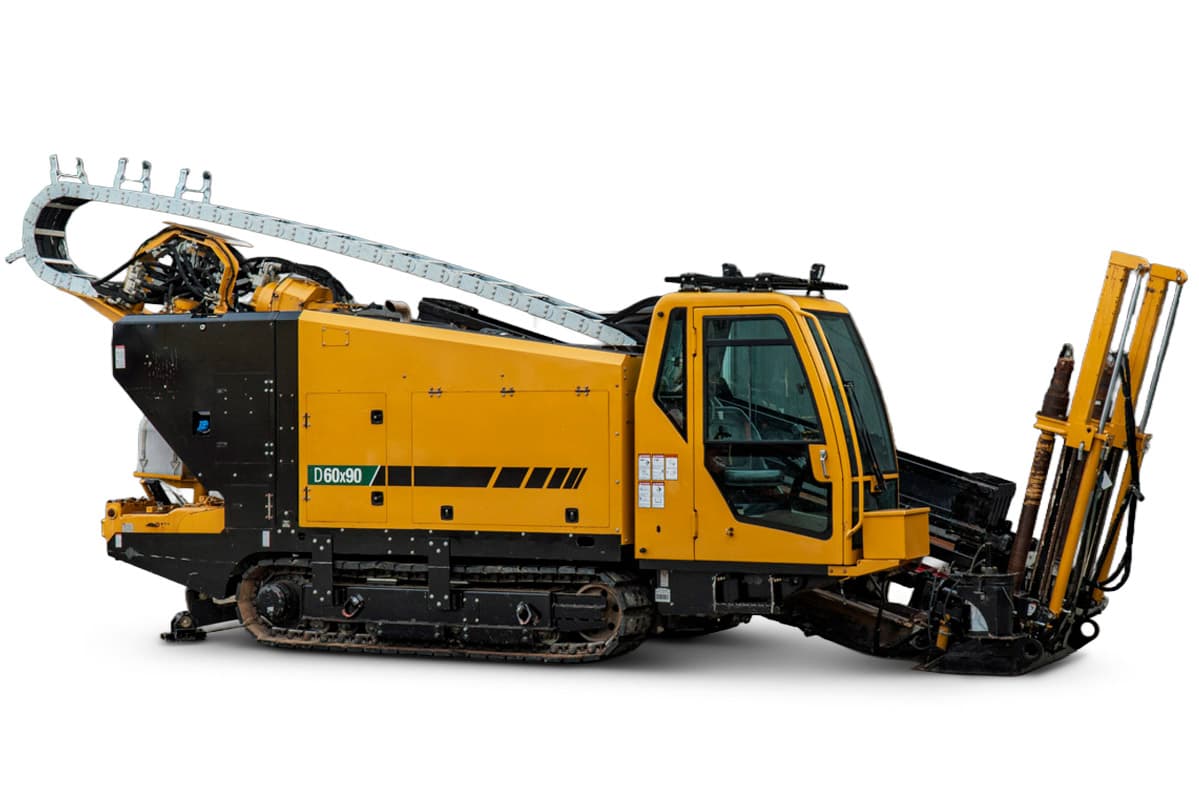
2020 Vermeer D60x90 S3
SALE PENDING
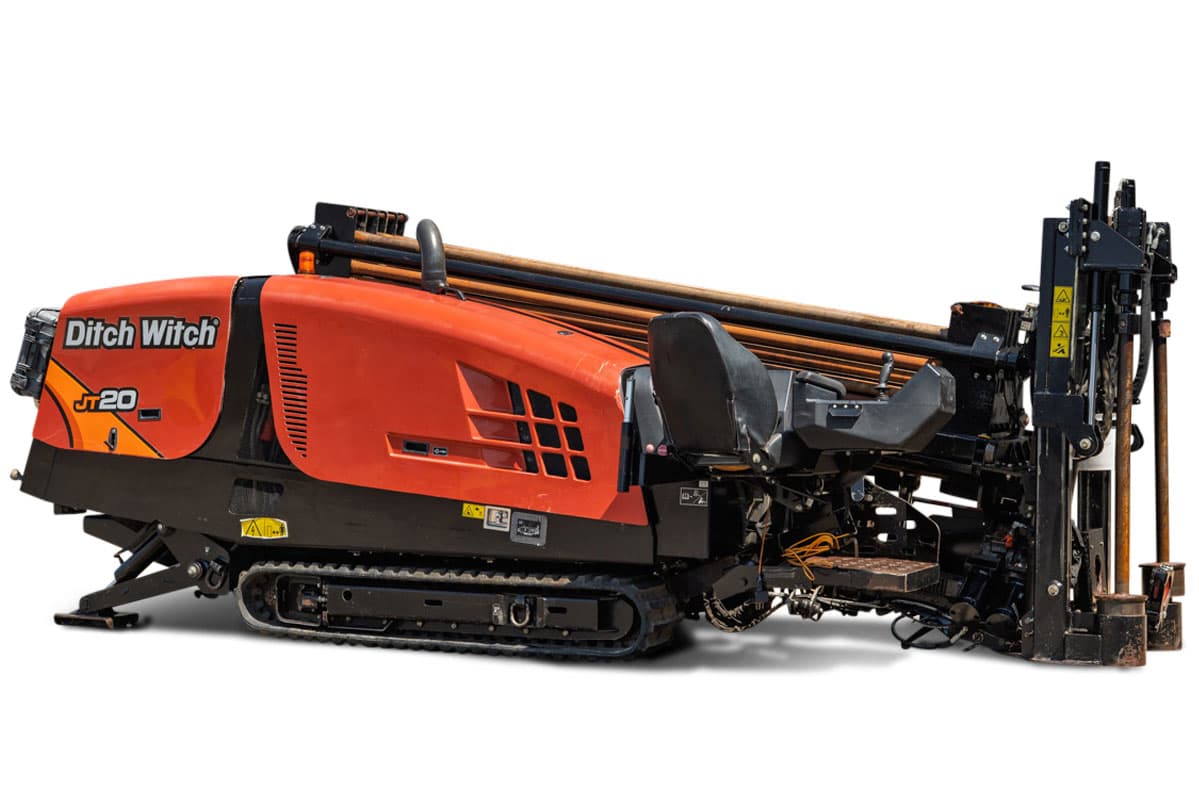
2022 Ditch Witch JT20
$149,000
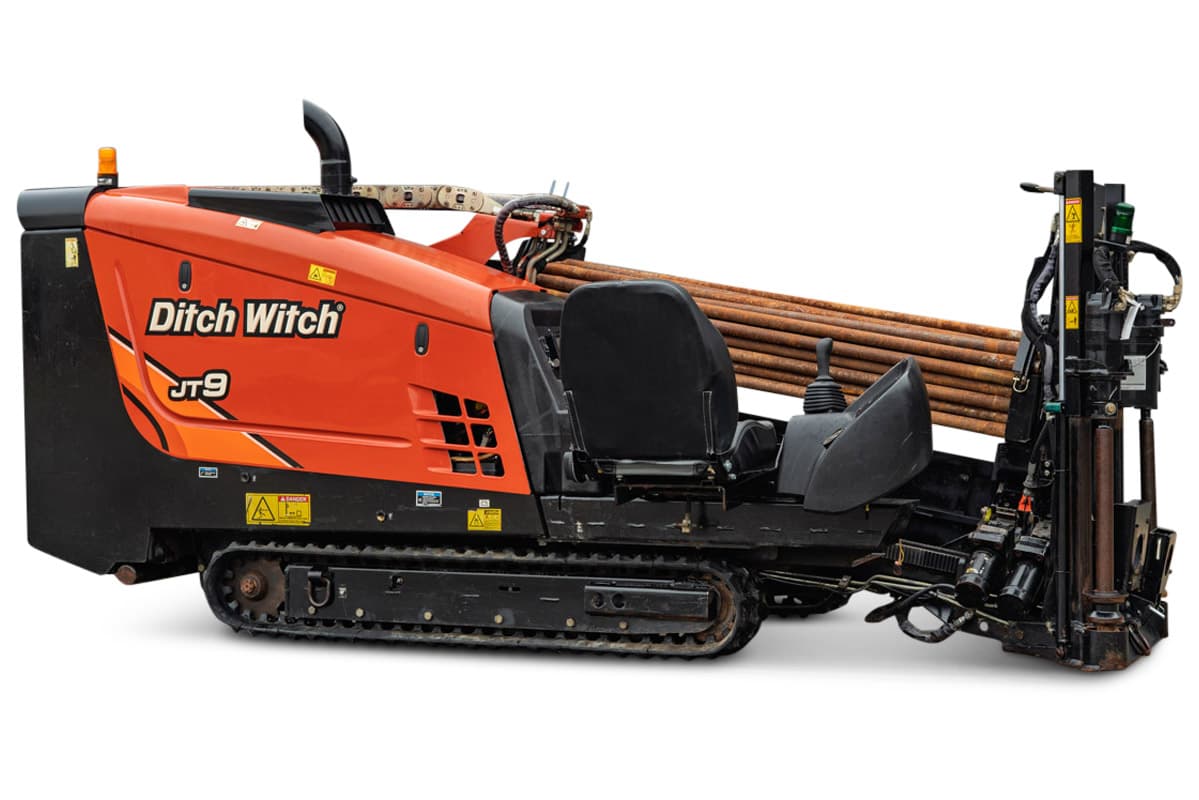
2016 Ditch Witch JT9
$79,000
Want a quote today? Call (877) 288-0280.
Reading the data behind the meter
The hour meter is a summary. The machine records far more than that, and on a modern rig (roughly 2013 and newer) you can get at it. There are two different data sources, and buyers conflate them.
The telematics portal is the fleet-management layer. Vermeer machines report into the VermeerOne platform (the base package is complimentary for the first few years; a paid fleet tier adds more), and Ditch Witch machines into Orange Intel. Between them these portals will typically show you machine location, total and idle hours, fuel and DEF levels, basic health and maintenance indicators, and on the paid Vermeer tier, fault and diagnostic codes. Useful, but not the whole picture.
The engine ECM is the deeper layer. Heavy diesel engines log faults to the SAE J1939 standard, where every fault code is a pair: an SPN (Suspect Parameter Number) that identifies which component or parameter reported a problem, and an FMI (Failure Mode Identifier) that describes how it failed. A dealer technician can pull the full, time-stamped fault history with a J1939 scan tool. That history is where the real story lives, and it is worth paying for.
What to ask for, and what each signal means
- Total hours versus idle hours. A machine showing high total hours but a lot of idle has less wear on bore-critical systems than the meter implies. As a rough benchmark, roughly 25 to 35 percent idle is normal for active HDD work; well above that, toward 50 percent and up, is worth questioning. Be aware that heavy idling is its own problem on a Tier 4 diesel, because it prevents the exhaust from getting hot enough and forces more frequent particulate-filter regenerations.
- Fault-code history, including cleared codes. Ask for the uncleared fault history going back at least 12 months. A seller who wiped the codes right before listing is a red flag, because clearing can mask a recurring hydraulic-pressure, cooling, or transmission fault. The same SPN appearing repeatedly, even after clears, points to a systemic problem.
- DPF regeneration frequency (Tier 4 engines). Frequent active regenerations, more than one per shift, suggest short-cycle or low-load work, heavy idling, or a clogging filter. Replacing a particulate filter on a mid-class off-road engine runs roughly $3,000 to $6,000 in parts before labor, and more on larger machines, so this is not a trivial line item.
- Active operating hours versus total hours. Some platforms distinguish powered-on time from time actually thrusting and rotating. A rig with 3,500 total hours but far fewer bore hours has seen less stress on its thrust and rotation systems than the headline number suggests.
- Maintenance compliance. Ask whether the seller can export the maintenance and service history. A pattern of deferred or ignored service intervals is a direct read on how the machine was treated.
How to actually get the data
- Ask the seller for a printed or screenshot telematics report. Most dealers can produce one in a few minutes.
- If the seller refuses or claims the data is unavailable, that refusal is itself information.
- For an independent read, pay a Vermeer or Ditch Witch dealer technician to plug in a diagnostic tool and pull the ECM fault history. Budget roughly $100 to $250, about an hour of shop rate. On a six-figure purchase, it is the cheapest insurance you will buy.
When high hours are still the smart buy
High hours are not automatically bad. We routinely watch buyers walk away from well-priced high-hour machines because of the number, then overpay for a low-hour machine with a poor maintenance history. Several scenarios make a 5,000-plus-hour rig the smarter purchase.
1. Documented dealer maintenance throughout
A 6,000-hour utility-mid machine with every dealer service interval logged is often in better shape than a 3,000-hour private-sale machine with a notebook full of gaps. Documented maintenance is the single biggest reliability variable, full stop.
2. A recent, documented major rebuild
A 5,500-hour rig with a hydraulic pump replaced at 5,000 hours and a recent carriage rebuild is effectively a refreshed machine. The hour count is misleading; the remaining life on the critical components is high.
3. A heavy machine that lived an easy life
A 6,000-hour heavy rig that did utility distribution rather than high-pullback gas main is well inside its service envelope. Heavy machines are built for sustained load, so moderate use leaves real headroom.
4. The price already reflects a planned rebuild
A 7,500-hour mid-heavy rig at $80,000, against $140,000 for a comparable 3,500-hour machine, with a budgeted $25,000 rebuild, can pencil out to a lower total cost. The math is the verdict, not the hour number.
Auction hours versus dealer hours
Where you buy shapes the hours you see. Auction-channel rigs (GovPlanet, IronPlanet) skew older and higher-hour, sold as-is with no recourse. As a snapshot of the pattern: a 2000 Ditch Witch JT7020 Mach 1 with 9,603 hours recently carried a roughly $65,000 buy-now price at auction. Dealer-channel machines (HDD Broker, MachineryTrader, our own inventory) cluster lower and command a premium for documented history and warranty programs.
Our own lot shows the pattern, and shows that hours are only one input to price. A 2023 Vermeer D23x30 S3 at about 2,400 hours lists around $199,000; a 2019 D23x30 S3 at about 4,560 hours lists around $109,000; and, tellingly, a newer 2019 D24x40 at 5,650 hours can still ask more than an older 2016 D24x40 at 3,060 hours, because year, configuration, and condition all push back against the hour number.
As a general rule for used equipment, auction prices tend to run somewhere around 70 to 80 percent of dealer asking prices, a gap that narrows on older machines. The dealer premium buys documented inspection history, warranty or confidence programs, and known service records. For a buyer without an in-house shop, that premium is almost always worth it. For a buyer with strong mechanical capability who will do a thorough pre-purchase inspection and budget the rebuilds, auction-sourced rigs hold the most margin.
The dealer's view
The hour fixation is one of the most expensive mistakes in used HDD buying. The number on the meter is where the evaluation starts, not where it ends. A documented, well-maintained high-hour machine at a fair price beats a cheap, undocumented low-hour machine almost every time.
When to walk away, whatever the price
Some conditions are not negotiable. When you see these, no hour count and no discount justifies the buy.
- No maintenance records, high hours, and a private seller. The compounding unknowns make any price a gamble.
- Fault-code history wiped with no service documentation. Something was hidden.
- A frame or weld repair on the main boom or rack channel. Frame damage causes component misalignment that compounds over time. Any hour count.
- Hydraulic pump cavitation under load. The pump is failing now, and the rebuild can rival the purchase price.
- A DPF delete on a Tier 4 machine. Removing emissions controls is illegal under the federal Clean Air Act, which explicitly covers nonroad construction engines, and it leaves the new owner holding the regulatory and civil-liability risk. It is also a reliable signal that the machine was run hard and cut corners.
- Drill pipe worn past its wear indicators, sold with the rig. Ditch Witch drill pipe carries wear-indicator grooves on the male tool joint; when you can no longer see those grooves, the pipe is done. If a seller wants to include worn-out pipe in the price, treat the pipe as worth zero and budget full replacement.
- Oil-field history with no fluid-analysis records. Hidden contamination damage you cannot see.
- The seller refuses a test bore. A machine that cannot be demonstrated under load is hiding a running problem.
For every one of these, the way to confirm it on the actual machine is a disciplined inspection. Our used directional drill inspection checklist is the field sequence we use, and it is the natural next step once the hours math says a machine is worth a closer look.
How to inspect a high-hour rig
The higher the hours, the more the inspection matters and the less the meter matters. A few specifics worth knowing before you go: on the drill string, measure outside diameter against the factory spec with a micrometer, and treat 30 to 40 thousandths of an inch of wear as the replacement threshold (a 10-foot joint runs roughly $300 to $400). On the carriage, the rack and pinion should show an even wear pattern top to bottom, mesh cleanly, and have no slop when you walk the carriage by hand. The full system-by-system process, including the nine areas we check on every machine we buy, lives in the inspection checklist.
The bottom line
"How many hours is too many" has no single answer because hours are a proxy for the things that actually matter: what the machine did, how it was maintained, and what class it belongs to. Use the class table for a baseline, adjust it for application and maintenance, pull the data behind the meter, and run the rebuild-cost math before you talk price. Do that, and a high hour reading stops being a reason to walk and becomes a reason to negotiate. If the machine whose hours you are weighing is your own and the question is whether to sell it, what is my used directional drill worth runs the same math from the seller's side.
Looking at a specific machine and unsure whether the hours work for the price? Talk to a WorldHDD specialist. We will help you read the hours, the application, and the asking price together, and tell you honestly whether the math works.
Frequently asked questions
Does a higher hour count automatically mean a drill is worn out, or does maintenance history matter more?
Maintenance history matters more. A documented, dealer-serviced machine at 6,000 hours is frequently in better condition than an undocumented private-sale machine at 3,000 hours. Hours are a proxy for wear, but they assume average use and average upkeep. A complete service record, evidence that intervals were honored, and any documented rebuilds tell you far more about remaining life than the meter does. Read the records first, then the hour count.
If a drill has 4,500 hours but was rebuilt at 3,000 hours, does the rebuild reset the wear clock?
It resets the clock on whatever was actually rebuilt, not on the whole machine. A documented hydraulic pump replacement at 3,000 hours means that pump effectively has 1,500 hours, but the engine, undercarriage, and drive components still carry the full 4,500. Ask exactly what the rebuild covered and get the invoice. A genuine major rebuild can make a high-hour machine a refreshed one; a vague "rebuilt" with no paperwork should be treated as marketing, not fact.
What is the difference between engine hours and bore hours, and how do I find out which I am being quoted?
Engine hours count every hour the machine was powered on, including idling. Bore hours, where a machine tracks them, count time actually thrusting and rotating. A rig can show 3,500 engine hours but far fewer bore hours, meaning less stress on the thrust and rotation systems than the headline number suggests. Ask the seller which figure the meter shows, and ask a dealer to pull the telematics or ECM data, which can separate total powered-on time from active idle and, on some platforms, working time.
The seller says the high hours are only from short residential bores, not long crossings. Better or worse?
Better, if it is true. Short, light fiber and residential bores are easier hours on the hydraulics and drill string than long, high-pullback crossings, so a fiber rig generally has more mechanical life left at a given hour count. Verify the claim rather than take it: light, even drill-string wear and clean mud-pump pistons support a fiber history, while heavy thread wear and scored pistons point to harder work. One caveat, short-cycle work on a Tier 4 machine can stress the particulate filter, so check regeneration frequency.
At what hour threshold does a used mini drill stop being worth buying?
For a mini or micro-class machine (think D10x15 or JT10/JT20), expect "high hours" to start around 3,000, with major rebuilds typically due between 2,500 and 3,500 hours. Past that, the rebuild cost relative to the machine's value rises quickly, and renting or buying newer often pencils out better, unless the price already reflects a needed rebuild or the machine has documented recent work. As Vermeer's own guidance notes, a small unit with high hours is generally less favorable than a larger drill at the same hours.
One drill has 2,200 hours at $145,000, another has 4,800 hours at $89,000. How do I tell which is the better deal?
Run the rebuild math. Estimate what the higher-hour machine is likely to need in the next 12 months and add it to the price. If the 4,800-hour machine needs, say, a $15,000 pump and a $10,000 carriage refresh soon, its real cost is around $114,000, still well under the low-hour machine, and you should weigh that gap against the lower-hour machine's remaining-life advantage. Then compare maintenance records and application history. Often the documented higher-hour machine wins; sometimes the low-hour one is worth the premium. The math decides, not the meter.
Can I trust the hour meter, and what physical signs reveal a rolled-back or inaccurate reading?
Cross-check the meter against the machine. Wear that does not match the hours is the tell: heavily worn controls, seat, footwells, and pedals on a "low-hour" rig, drill-string and carriage wear inconsistent with the reading, or service stickers and fluid-change records that imply more hours than the meter shows. On modern machines, the telematics and ECM keep their own hour records, so ask a dealer to pull them and compare. A meter reading that conflicts with the wear or the electronic data is a serious red flag.
How can I tell if the hour meter has been tampered with?
The most reliable method on a post-2013 machine is to compare the displayed meter against the hours logged in the engine ECM and the telematics platform, which are far harder to alter and are time-stamped. A dealer technician can pull both in minutes. Beyond the electronics, look for a replaced or mismatched gauge cluster, wear that outpaces the reading, and a service history whose dates and intervals do not line up with the displayed hours. Any unexplained gap warrants walking away or a steep discount.
If a Vermeer dealer says a 5,500-hour machine is "ready to work," should I trust that?
Trust but verify, and get it in writing. A reputable dealer's reconditioning and any included warranty or confidence program carry real weight, and a documented dealer-serviced 5,500-hour machine can be an excellent buy. But "ready to work" is not a substitute for paperwork. Ask what was inspected and replaced, request the service and fault history, and confirm what the warranty actually covers and for how long. A dealer standing behind the machine in writing is exactly the premium you are paying for over an as-is auction unit.
Are auction machines typically higher hours than dealer trade-ins, and why the price gap?
Yes. Auction-channel rigs (GovPlanet, IronPlanet) skew older and higher-hour and sell as-is with no recourse, while dealer machines cluster lower and come with documented history and often a warranty. As a general used-equipment rule of thumb, auction prices tend to run roughly 70 to 80 percent of dealer asking, with the gap narrowing on older machines. The premium pays for inspection history, warranty programs, and known service records. Without an in-house shop, the dealer premium is usually worth it; with one, auction rigs offer the most margin if you inspect carefully.
Should I avoid Tier 4 machines with high regeneration counts?
Not avoid outright, but investigate. Frequent active diesel-particulate-filter regenerations, more than about one per shift, suggest heavy idling, short-cycle low-load work, or a filter that is clogging. None is automatically disqualifying, but each warrants a closer look at how the machine was used and the condition of the emissions system, since a filter replacement on a mid-class engine runs roughly $3,000 to $6,000 in parts. Ask for the regen and idle data, and never accept a machine with the emissions controls deleted, which is illegal and a liability.
If maintenance records start at hour 2,000 instead of hour 0, is that a problem?
It is a question to resolve, not an automatic deal-breaker. Records starting at 2,000 hours often just mean the machine changed hands or changed service providers then, which is common. Ask what happened in the first 2,000 hours, whether the gap reflects an undocumented owner or simply a different shop, and whether the ECM and telematics show anything concerning from that period. Consistent, complete records from 2,000 hours forward on an otherwise sound machine are usually fine; an unexplained gap combined with other red flags is not.
Sources and references. Quotes and the published lifecycle figures were verified against the original sources in May 2026. Rebuild-cost ranges other than the 2009 Equipment World anchor are planning estimates assembled from analogous heavy-equipment data, not confirmed HDD invoices.
- ForConstructionPros, "Should You Buy New or Used?" (source for the Richard Levings / Ditch Witch hours quotes)
- Equipment World, "Owning and Operating Costs" (2009; Vermeer trenchless service team lifecycle and rebuild figures)
- Equipment World, "How to Inspect a Used Directional Drill" (drill-pipe wear measurement and rack-and-pinion inspection)
- Vermeer Pro Tips, "What To Know When Buying A Used Horizontal Directional Drill"
- Ditch Witch, "When Is It Time to Replace Parts on My HDD?" (drill-pipe wear-indicator grooves)
- SAE J1939 standard (SPN and FMI diesel fault-code framework)
- GovPlanet used directional drill auctions (auction-channel hour and price reference)
- HDD Broker used listings (dealer-channel market reference)