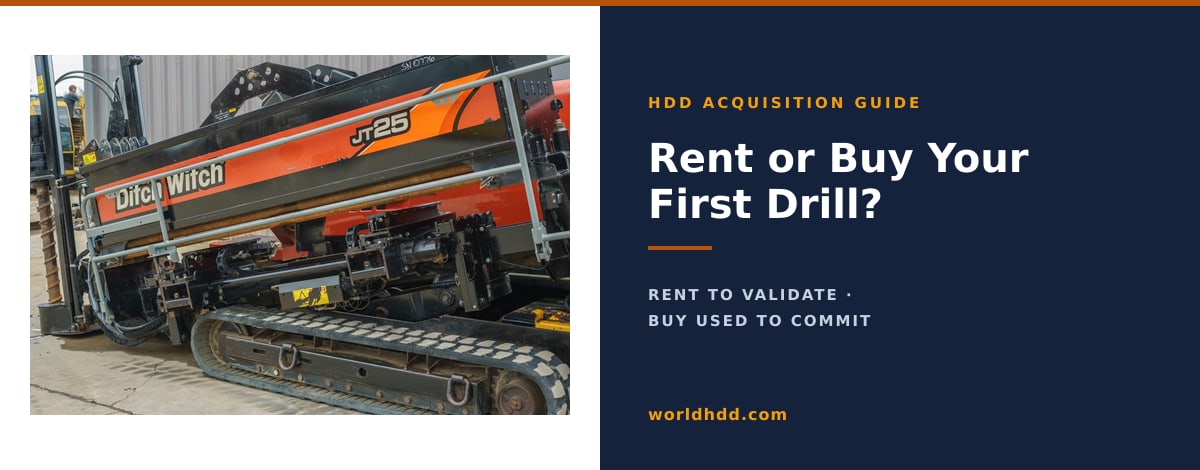
"Should I rent or buy?" is one of the first real questions a new directional drilling contractor faces. Search it and you will mostly find answers written by the people selling new machines and the chains renting them, each with a thumb on the scale. This is the version those players will not write: the honest rent-versus-buy decision for a first-time contractor, where "buy" means buy used, not buy new. We sell used HDD equipment, and we will still tell you when renting is the right call, because for the committed contractor with steady work the math usually points to buying used anyway, and an honest answer is worth more than a sales pitch.
One thing up front so the rest reads straight: WorldHDD is a used-equipment dealer. We do not rent and we do not offer rent-to-own, so we have no rental product to push you toward and no lease to upsell. Where we mention renting or rent-to-own, those come from manufacturer dealers and rental chains, not from us. Our only role in this decision is as the place you buy used when buying is the answer.
The short answer
If you have committed, steady work that will keep a machine busy, buying used (financed, to protect your cash) is usually the right call, and it pays for itself against rental faster than most people expect. Rent instead when your work is still unproven, sporadic, or a one-off, or when you need a size class you rarely touch. And if you are unsure, there is a third path that beats guessing: rent (or subcontract) to validate the business, then buy used once the revenue is real. The rest of this article shows you how to land on your answer.
The HDD rental reality
Before the decision framework, an honest look at what renting an HDD rig actually involves, because it is not as simple as the question assumes.
Representative rental rates
Here is a current rate sheet from a Ditch Witch dealer, by machine class. Treat these as representative single-dealer rates: they vary by region, by dealer, and over time, and they are bare-rental figures (you cover maintenance, fuel, operator, and consumables).
| Model | Class | Monthly | Weekly |
|---|---|---|---|
| JT5 | Mini (~5,000 lb) | $4,500 | $1,500 |
| JT9 | Mini (~9,000 lb) | $5,000 | $2,500 |
| JT20 | Mini (~20,000 lb) | $9,000 | by quote |
| JT25 | Utility-mid (~27,000 lb) | $10,500 | by quote |
| JT30 | Mid-heavy (~30,000 lb) | $13,500 | by quote |
| JT40 | Mid-heavy (~40,000 lb) | $18,000 | by quote |
| AT40 (rock) | Rock-mid (~40,000 lb) | $35,000 | by quote |
| JT60 | Heavy (~60,000 lb) | $24,000 | by quote |
| JT100 | Heavy (~100,000 lb) | $45,000 | by quote |
Representative rates from a current Ditch Witch dealer rate sheet (Ditch Witch West). Bare rental; the renter covers fuel, operator, consumables, and transport. Weekly rates are listed by the dealer only on the smaller classes; the JT25 and JT30 monthly figures share a rate code on the sheet, so treat that split as approximate. Rock (AT) units often require longer commitments.
What a rental includes
On an integrated utility-mid package (JT20 through JT30 class), a dealer rental typically includes the rig, roughly 500 feet of drill rod, a tracker/locator, and a mud system, often on a trailer with a water tank. Smaller mini-class rentals can be rig-only. In every case the renter still buys the wear items (reamers, bits, beacon housings), plus fuel, the operator's time, and transport. That matters for the math below: the headline rig rate is not the whole cost of running a rented rig.
Rent-to-own
Rent-to-own, where rental payments can apply toward a purchase, exists through manufacturer dealers (Vermeer, for instance, notes that many renters end up buying), and finance-to-own quotes are available through marketplaces like KWIPPED. It is rare at the national chains. WorldHDD does not offer rent-to-own; for a WorldHDD buyer, the equivalent lower-commitment route is financing a used purchase, which we cover in how to finance used HDD equipment.
The honest part nobody else will tell you: you may not be able to rent at all
HDD rental is genuinely thin outside manufacturer-dealer markets. The national chains do not fill the gap: HDD directional drill rigs are not a standard catalog item at United Rentals, and Sunbelt carries Ditch Witch boring tools and vacuum excavators, not the steerable drill rigs. Practical HDD rental means manufacturer-dealer fleets, which are quote-based, often booked out, and concentrated in higher-population markets. For a contractor in a secondary or rural market, the question "can I even rent one?" frequently answers itself, and buying used becomes the only reliable way to control your own schedule. That is market reality, not a sales angle.
When renting makes sense
Renting is genuinely the right call in several situations, and a guide that pretended otherwise would not be worth reading:
- Your work is unproven. You do not yet have steady contracts and you do not want to commit capital to a machine that might sit idle.
- It is a one-off job. A single project that does not justify a purchase, especially in a size class outside your normal work.
- Your utilization will be low. Sporadic or seasonal HDD work that stays below the break-even threshold described in the next section.
- You are testing the business. You want to confirm HDD is profitable for you before committing. That is the third path, below.
- You need an off-size machine occasionally. Own your workhorse and rent the occasional bigger or smaller rig rather than buying two.
- Rental is actually available and affordable near you. Which, per the reality above, is not a given.
When buying used makes sense
For the committed contractor, these cases are more common, and notice the framing throughout is buy used, not buy new:
- You have committed, steady work. Signed contracts or a reliable pipeline that keeps a machine busy.
- Your utilization clears the break-even threshold. You will use the machine enough that renting costs more over time.
- Rental is not available locally. Common, and it makes buying used the only practical path.
- You want to build equity and claim the tax benefits. Ownership lets you elect Section 179 and bonus depreciation (used equipment qualifies; see the financing guide), while a rental payment is just a deductible operating expense.
- You can finance to preserve working capital. Buying used with financing keeps cash free for operations, which is the heart of the startup-cost argument.
- You want control. Your machine, your maintenance, your availability, with no rental scheduling constraints and no per-hour usage anxiety.
- You value the resale liquidity. Established used models hold value, so you can sell or trade when your needs change.
Why used specifically
Buying used changes the rent-versus-buy math compared to buying new. A lower purchase price means a lower break-even utilization, a faster payback, and less exposure to the steep first-years depreciation curve. A used utility-mid rig clears its break-even against rental far sooner than a new one would, which is exactly the case manufacturers (who sell new) and rental chains (who sell rental) will not make for you. For what to actually buy when you commit, see the HDD starter package guide and, for fiber work specifically, the best used drills for fiber contractors.
First drills under $100K
The size and price range most first-time buyers land on.
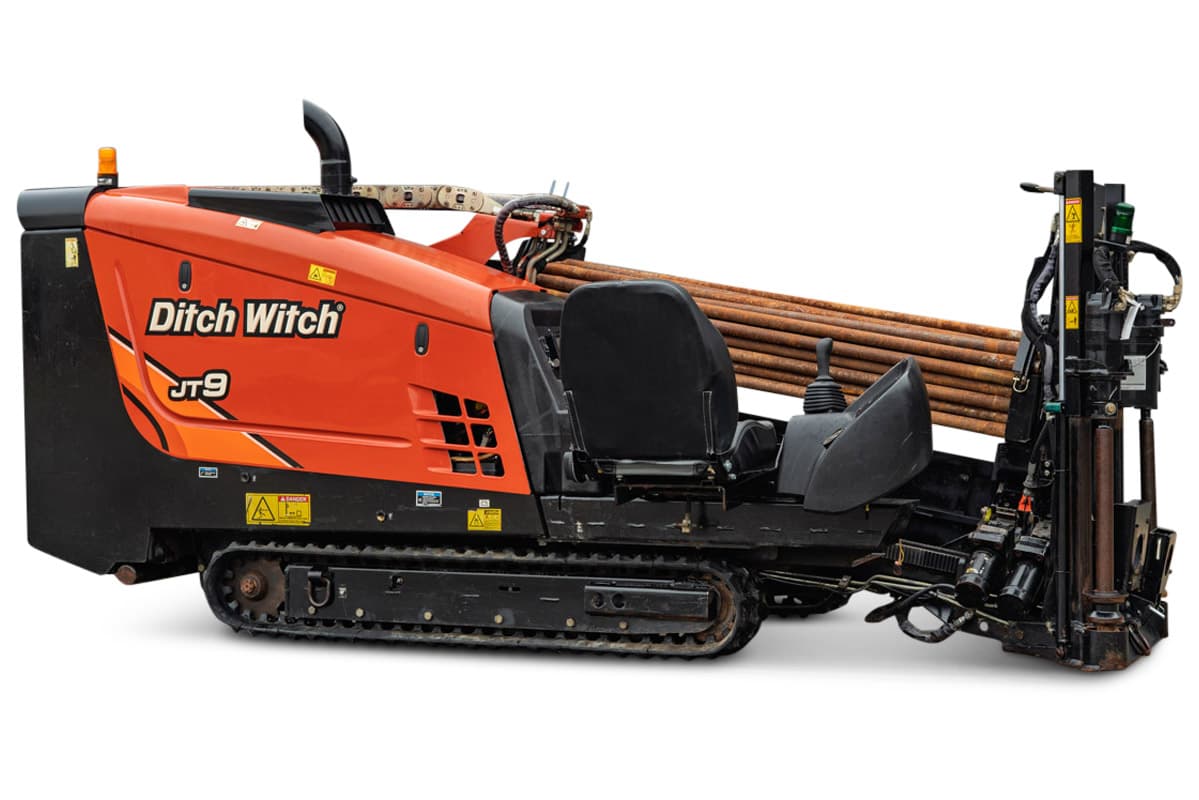
2016 Ditch Witch JT9
$79,000
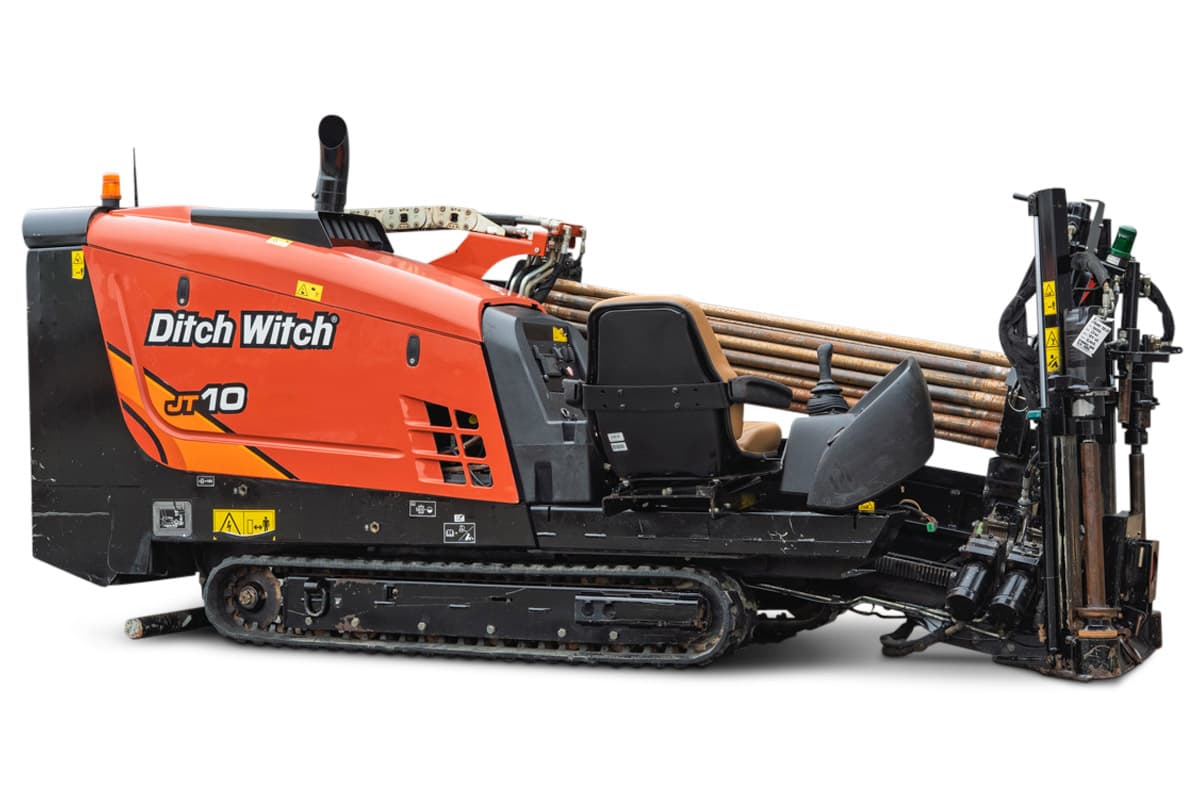
2022 Ditch Witch JT10
$99,000
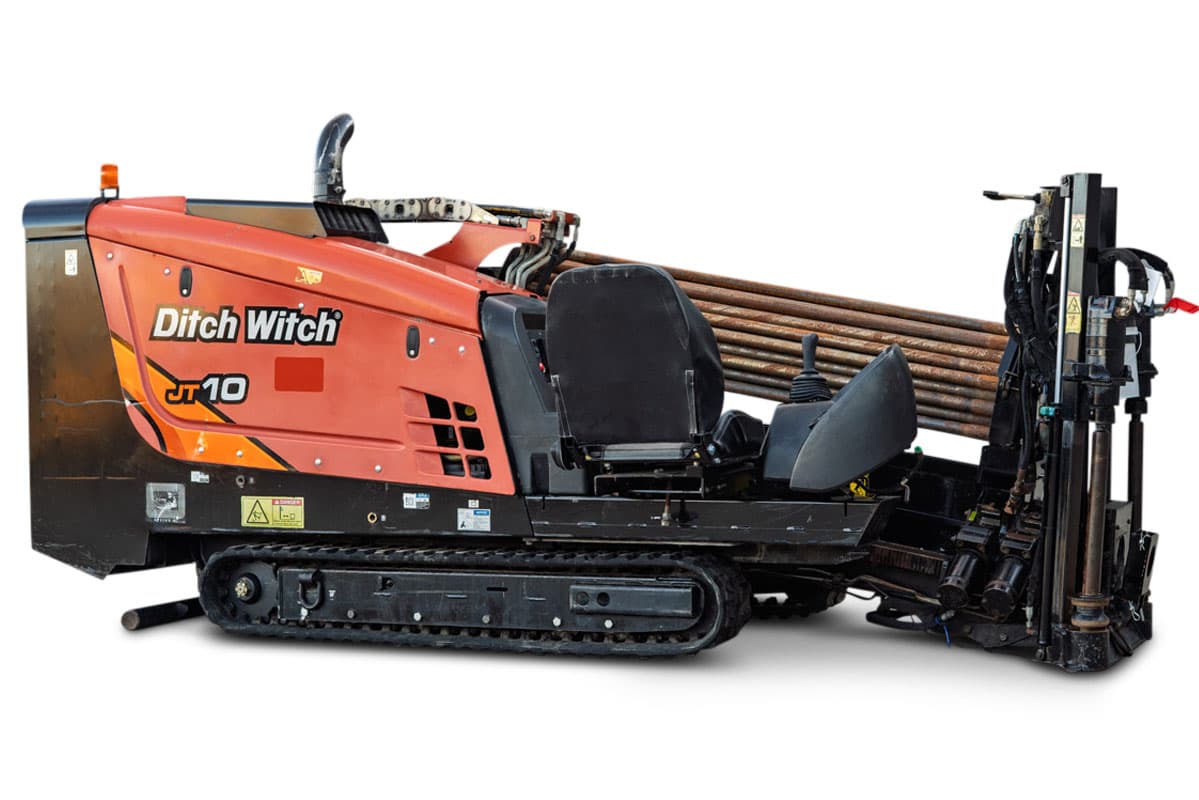
2017 Ditch Witch JT10
$84,000
Want a quote today? Call (877) 288-0280.
The break-even math
The construction-equipment rule of thumb, cited fairly consistently across fleet-cost sources, is that roughly 60 to 70 percent utilization is the break-even point. Run a machine more than that share of its available time and ownership wins on lifecycle cost; run it less and renting stays cheaper. The HDD-specific question is where that line falls for a used machine, and the answer is the core of this whole decision.
A worked example, utility-mid class
Take a JT20 or JT25 class machine, the common first utility rig:
- Rental for that class runs about $9,000 to $11,000 a month (from the table above).
- A used utility-mid rig runs roughly $90,000 to $160,000 depending on make, model, age, and hours (see the starter package guide for how used pricing breaks down).
- At those numbers, the rental dollars you would spend add up to the purchase price in roughly 9 to 16 months of steady use. After that point, every rental month is money you would not have spent as an owner.
That is a gross comparison against rental dollars only. The true picture has costs on both sides: as an owner you also carry financing (commonly 7 to 15 percent on an HDD loan), insurance on the rig (roughly $3,000 to $6,000 a year), and a maintenance reserve (roughly $5,000 to $8,000 a year), which push the true break-even a few months later than the gross figure. On the other hand, rental rates usually bundle maintenance that an owner self-funds, and the rig-only rentals leave you buying a locator and mud system anyway. Net it out and, for a contractor working steadily, ownership pulls ahead inside the first year to year and a half.
The comparison manufacturers quietly avoid
A new utility-mid drill runs roughly $150,000 to $200,000, and at that price the break-even against rental stretches to about 15 to 22 months even for a busy contractor, which is exactly why new-equipment articles can make renting look attractive for longer. A used machine at $90,000 to $160,000 reaches break-even far sooner. The real first-timer comparison is not "rent versus buy new," it is "rent versus buy used," and that reframing reaches a genuinely different conclusion. Used also skips the steepest depreciation years, so your resale value at exit is more predictable.
The third path: rent to validate, buy used to commit
For the contractor who is not sure yet, the smartest move is not to guess between renting and buying. It is to sequence them:
- Rent or subcontract for your first jobs. Validate that you can win work, complete bores profitably, and that the business is real, all at a low capital commitment while it is still unproven.
- Confirm the economics. Once you have steady work and proven margins, the uncertainty that justified renting is gone.
- Buy used to commit. With validated revenue, buy a used machine, finance it to preserve your working capital, claim the tax benefits, and stop paying the rental premium.
This path hedges the early uncertainty and then captures the long-term economics once that uncertainty is gone. It is the capital-disciplined way into HDD.
Where this connects
The third path ties the whole entry decision together. Before you commit capital, read the full startup cost picture in how much it costs to start a directional boring business (the equipment is only about half the real number), and when you are ready to buy, financing the used purchase keeps your cash working through the slow-pay months instead of sunk in the machine.
The decision framework
Put your own situation against these factors and your answer usually becomes clear:
| Factor | Points to rent | Points to buy used |
|---|---|---|
| Work pipeline | Uncertain or unproven | Committed and steady |
| Utilization | Below the break-even threshold | Above the break-even threshold |
| Capital position | Cannot buy and keep working capital | Can buy (especially financed) and keep a cash runway |
| Experience | Still learning the trade | Experienced operator |
| Local rental availability | Rental available and affordable | Rental thin or unavailable |
| Tax position | Do not need the deduction | Want Section 179 / bonus depreciation |
| Time horizon | Short-term or one-off need | Long-term business commitment |
The honest bottom line: for a committed first-time contractor with steady work, buying used (financed) is usually the right call. Renting is for the genuinely uncertain, sporadic, or one-off case, and the smartest play for the uncertain case is the third path, rent to validate then buy used to commit.
The bottom line
Renting and buying both have their place, and a dealer who tells you otherwise is selling, not advising. Rent when your work is unproven, sporadic, or a one-off, or use renting to validate the business before you commit. Buy used when you have steady work, when your utilization clears the break-even line, or when rental simply is not available where you operate, which is more often than the question assumes. For most committed first-time contractors, that points to buying a used machine, financed to protect the cash you need to actually run the business.
Decided to buy? Browse WorldHDD's used directional drill inventory. Buying used does not have to drain your cash: see how financing preserves your working capital. Still validating the business first? Start with the full startup cost picture. Not sure which way to go? Talk to a WorldHDD specialist about your situation.
Frequently asked questions
Is it cheaper to rent or buy a directional drill?
It depends on how much you will use it. The construction rule of thumb is that above roughly 60 to 70 percent utilization, owning beats renting on lifecycle cost; below that, renting is cheaper. For a contractor with steady work, a used utility-mid rig usually pays for itself against rental inside the first year to year and a half. For sporadic or one-off work, renting stays cheaper. The key variable is your real, honest utilization, not your best-case hopes.
Can you even rent a directional drill, or is the market mostly purchase?
Renting is harder than most people expect. HDD directional drill rigs are not a standard catalog item at national chains like United Rentals, and Sunbelt carries boring tools and vacuum excavators rather than the steerable rigs. Practical rental means manufacturer-dealer fleets, which are quote-based, often booked out, and concentrated in higher-population markets. In many secondary and rural markets, reliable rental simply is not available, which is one of the strongest reasons first-time contractors end up buying used.
How much does it cost to rent a directional drill?
Representative dealer rates run from about $4,500 a month for a mini JT5 class machine to $9,000 to $13,500 for a utility-mid class (JT20 to JT30), $18,000 for a mid-heavy JT40, and up to $45,000 for a heavy JT100. Rock-capable units run higher. These are bare-rental rates that vary by region and dealer, and you still cover fuel, the operator, consumables, and transport, so the true cost of running a rented rig is higher than the headline number.
At what point does buying a used drill beat renting?
For a utility-mid class machine, rental of about $9,000 to $11,000 a month adds up to the price of a used rig (roughly $90,000 to $160,000) in about 9 to 16 months of steady use. Add financing, insurance, and maintenance and the true break-even lands a few months later, but for a contractor working steadily, ownership still pulls ahead inside roughly the first year to year and a half. The busier you are, the faster buying wins.
Does renting include the locator, mud system, and tooling, or just the rig?
It varies by class. An integrated utility-mid package (JT20 to JT30) typically includes the rig, around 500 feet of drill rod, a tracker, and a mud system, often on a trailer. Mini-class rentals can be rig-only. In every case you still buy the wear items (reamers, bits, beacon housings) plus fuel and the operator. If you rent a rig-only machine, remember you still need a locator and mud system to actually work, which raises the real cost of renting.
What is rent-to-own for a directional drill, and is it a good deal?
Rent-to-own lets some of your rental payments apply toward an eventual purchase. It is offered mainly through manufacturer dealers and some finance marketplaces, and it can make sense if you are genuinely undecided. But it usually costs more in total than buying outright, because you pay the rental premium before you own anything. For a contractor who already knows they will commit, financing a used purchase from the start is generally cheaper than renting your way into ownership.
Should a brand-new HDD contractor rent first to test the business?
Often, yes, if your work is still unproven. Renting (or subcontracting) for your first jobs lets you confirm you can win work and complete bores profitably without committing six figures to a machine that might sit idle. Once the revenue is steady and the margins are proven, the uncertainty that justified renting is gone, and that is the moment to buy used. This rent-to-validate, buy-to-commit sequence is the capital-disciplined way to enter the business.
Is buying used better than renting and better than buying new for a first machine?
For most committed first-time contractors, yes. Used beats renting once your utilization is steady, and it beats buying new because the lower purchase price means a lower break-even, a faster payback, and less depreciation exposure. A new utility-mid drill can take 15 to 22 months to break even against rental; a used one reaches that point far sooner. Used machines from established model lines also hold their resale value, so your exit is more predictable.
What are the tax differences between renting and buying?
A rental payment is simply a deductible operating expense. Buying, by contrast, lets you elect Section 179 expensing and bonus depreciation, and used equipment qualifies, so an owner can often write down a large share of the purchase in the first year. That ownership tax benefit is one more factor that tilts a committed buyer toward purchasing. Tax rules and your situation vary, so confirm the specifics with your CPA; our financing guide covers the 2026 picture in more detail.
If I rent for my first few jobs, when should I switch to buying?
Switch when two things are true: your work pipeline is steady enough to clear the roughly 60 to 70 percent utilization line, and your margins are proven. At that point you are paying a rental premium for flexibility you no longer need. The cleanest move is to buy used and finance it, so you preserve the working capital that carries you through the 30-to-90-day gap between finishing a job and getting paid.
Sources and references. Rental rates were verified against a current Ditch Witch dealer rate sheet in 2026 and are representative single-dealer figures that vary regionally. Break-even and utilization figures are illustrative planning ranges.
- WorldHDD: how much it costs to start a directional boring business
- WorldHDD: how to finance used HDD equipment
- WorldHDD: the complete HDD starter package guide
- Vermeer ProTips, Rent, Lease or Buy (manufacturer framing and rent-to-own)
- Custom Truck One Source, Buy Used vs Rent 2026 (the 60-70% utilization threshold)
- United Rentals (HDD rigs absent from the standard rental catalog)
- HDD Broker (used directional drill market pricing)