
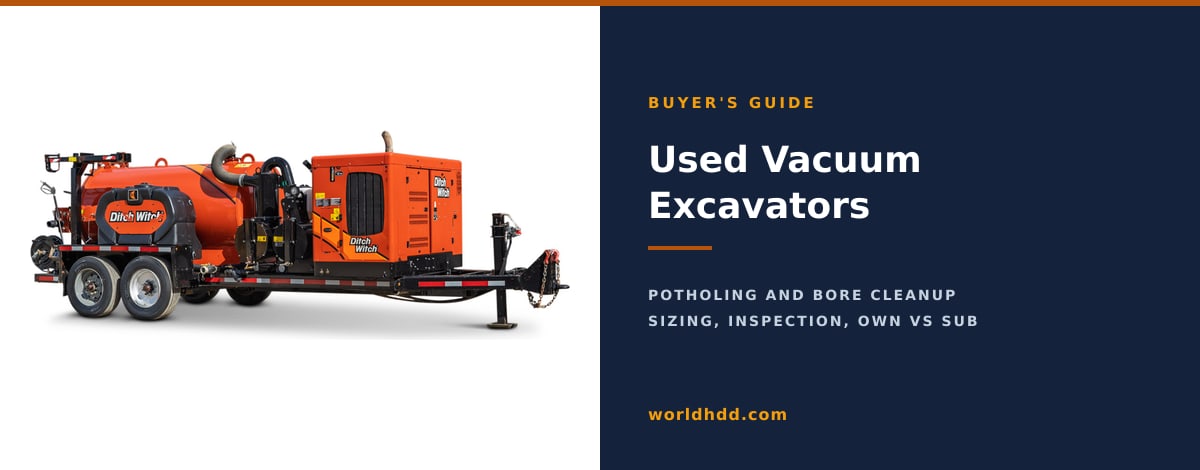
The vacuum excavator is usually the second serious machine a boring contractor buys, and it is the one that stops a bad day from becoming an uninsurable one. It exposes the utility you are about to drill past, and then it cleans up the slurry that the bore produces. This guide covers what the machine actually does on an HDD job, how to size one without overbuying, what to inspect before you hand over money, and the honest arithmetic on owning versus subcontracting.
We keep 27 vacuum excavator listings on the lot, $29,000 to $199,000, which is deep enough that the advice below is about matching a machine to your work rather than talking you into whatever we happen to have.
What a vacuum excavator does on an HDD job
Potholing, before the bore
Locate marks tell you roughly where something is. They do not tell you how deep it is, and depth is what your bore path has to clear. Soft-dig potholing puts eyes on the actual utility: a small hole, cut with water or air rather than steel, with the spoil vacuumed away as it is loosened. Nothing touches the pipe or the conduit. You get a verified depth and position, and you plan the bore around a fact rather than a paint line.
Industry accounts from HDD operators suggest that a single utility-strike incident, once you total repair liability, project downtime and potential regulatory exposure, can approach or exceed the cost of a new vacuum excavator. Every situation is different and we are not going to attach a number to yours. The point stands without one: the machine's job is to make the expensive event not happen.
Slurry management, during and after
The second job is cleanup. A bore produces returns, and those returns end up somewhere. A vacuum excavator recovers them from entry and exit pits and from the surface, which is what lets a crew leave a residential street looking like nobody drilled under it. That is not cosmetic: on a lot of municipal and utility contracts, site restoration is the difference between getting paid and getting a punch list.
A vacuum excavator is not a mud recycler
These two get bought for each other constantly, and the mistake is expensive in both directions. A vacuum excavator has a blower, a spoils tank and a boom: it collects slurry and takes it away. A mud recycler has a shale shaker and hydrocyclone cones: it separates cuttings out of returning fluid and puts cleaned mud back in your supply tank. If your problem is a street full of returns, you want a vac. If your problem is buying and hauling drilling fluid, you want a reclaimer, and no vacuum excavator will ever solve it. Plenty of crews own both, for different reasons. Our used HDD mud system buyer's guide covers the reclaimer side and the break-even.
Trailer, truck, or skid
Trailer-mounted, the HDD crew standard
Most boring contractors buy a trailer vac, and they are usually right to. It tows behind the truck already in the fleet, it needs no additional licensed driver, it parks on a residential street without becoming a traffic plan, and it is sized for the volume a utility bore actually generates. We hold 27 vacuum excavator listings in total and the majority of them are trailer units.
Truck-mounted, when volume demands it
A truck-mounted unit buys tank capacity, blower power and a shorter cycle between dump runs. It also buys a truck: more purchase price, more maintenance, more insurance, and depending on weight and configuration, a driver with the appropriate licence. That last point is genuinely regional, so confirm the requirement where you operate rather than assuming.
The honest sizing rule is that a truck-mounted unit earns its place when you are dumping more than once a day, or when the work is continuous enough that the machine is running most of every shift. If it is potholing a few times a week and cleaning up after bores, a trailer unit does the same job for a lot less money.
Water or air
Hydro excavation cuts with pressurised water. It is faster in most soils, it works in clay and frozen ground where air struggles, and it produces wet spoil that has to be handled as slurry. Air excavation cuts with compressed air, produces dry spoil that can often go straight back in the hole, and avoids the disposal problem entirely, but it is slower in heavy or wet soils and it moves less material per hour.
For HDD specifically, most crews land on water, because the same machine then handles bore returns, which are wet whether you like it or not. If your disposal situation is difficult and your soils are cooperative, air is worth a look.
Sizing without overbuying
Spoil tank
The most commonly overbought spec in the category. Tank size determines how long you work between dump runs, and the right size is set by the round trip to your disposal point, not by the biggest number available. A larger tank on a machine that dumps two miles away is money spent on capacity you never reach. Work out your realistic haul distance first, then size the tank to a working day.
Blower and hose together
Airflow and hose diameter are one decision, not two. A high-capacity blower behind an undersized hose is throttled by the hose, and a large hose on a modest blower loses the velocity that actually carries material. Match them, and be suspicious of a spec sheet that shouts about one while staying quiet about the other. Because we could not retrieve current OEM specification sheets for every model on our lot, we are not publishing airflow or tank figures per model here; ask us for the spec sheet on any specific unit and we will send it.
Water system, for potholing
Potholing performance is a function of pressure and flow together, plus how much water you carry. A machine that cuts well but runs out of water mid-morning has an onboard tank problem, not a pump problem. If potholing is the main use, weigh water capacity as heavily as spoil capacity.
Filtration
Cyclonic separation drops the heavy material out before it reaches the filter, which means less filter maintenance and better tolerance of wet, dirty work: exactly what HDD returns are. Cartridge filtration is simpler and cheaper but demands more attention and is less forgiving of slurry. For bore cleanup, cyclonic is generally the better fit, and on a used machine the state of the filtration is a direct read on how carefully the last owner operated.
Vacuum excavators available now
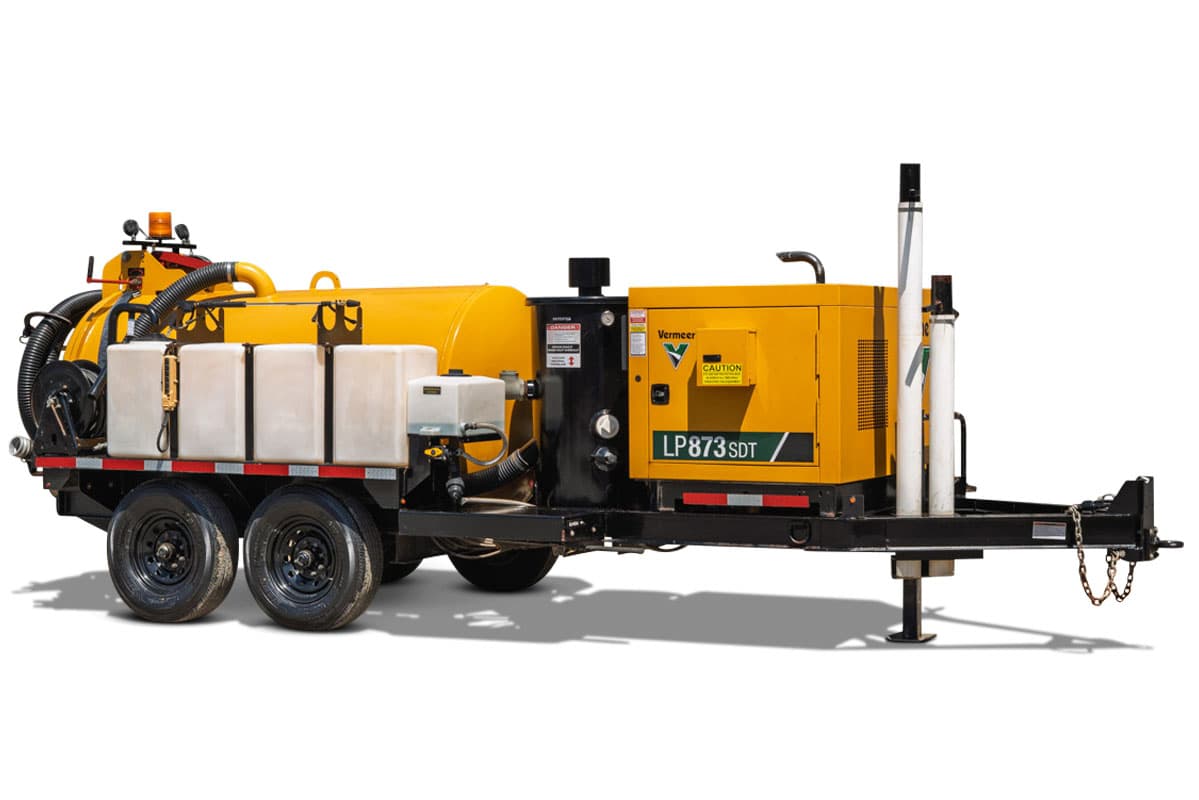
2025 Vermeer LP873SDT
$94,000
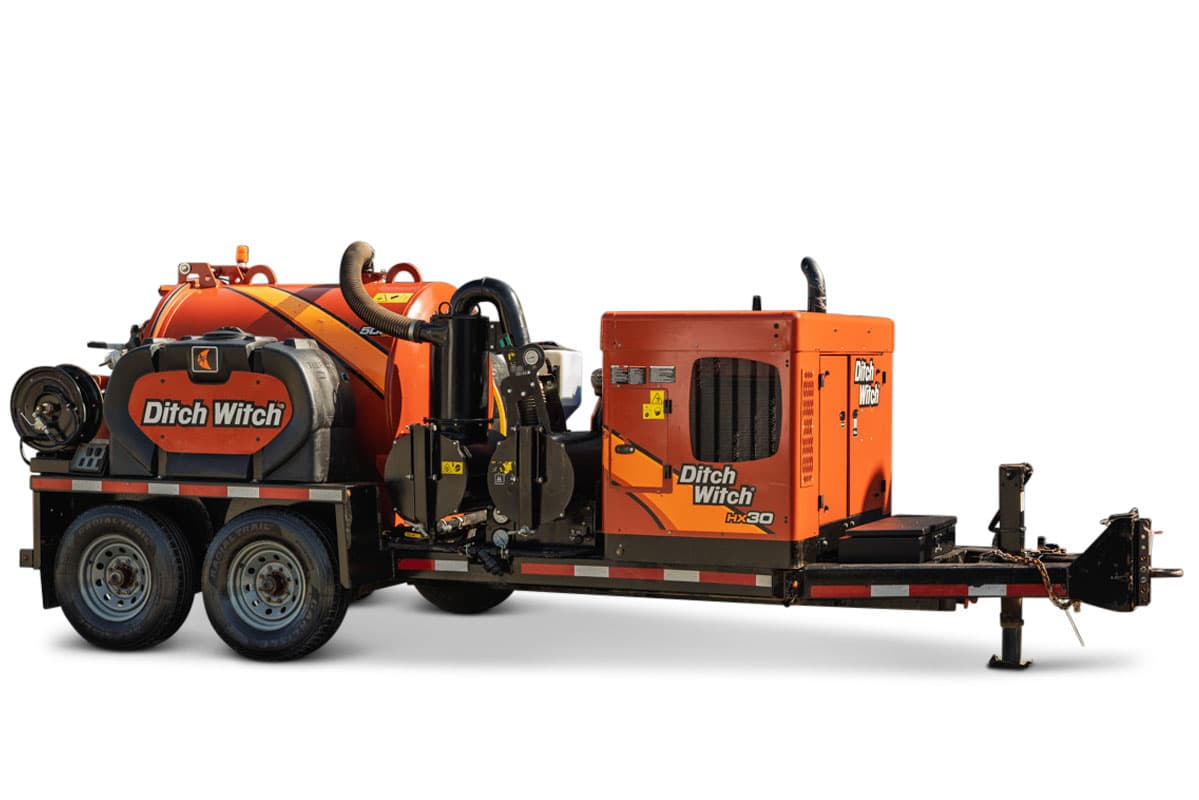
2022 Ditch Witch HX30
$69,000
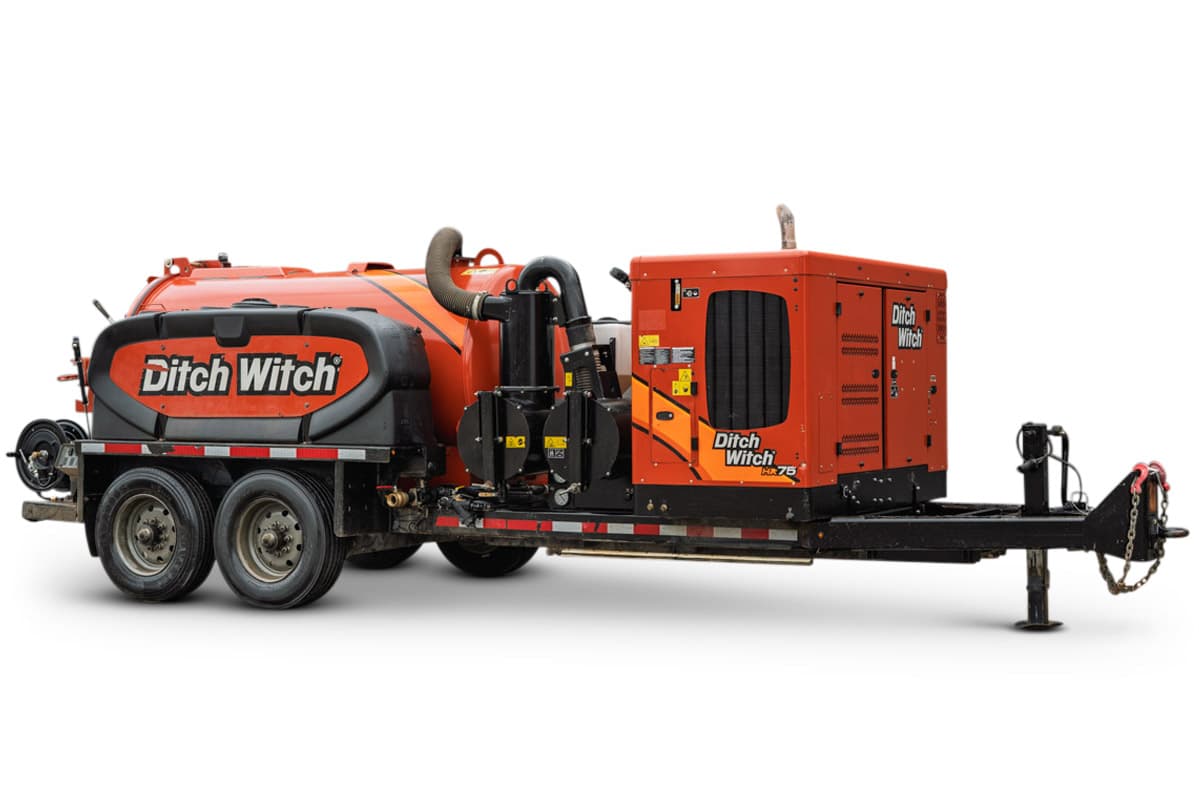
2023 Ditch Witch HX75
$89,000
Want a quote today? Call (877) 288-0280.
The regulatory case
Many state damage-prevention laws now require or strongly incentivise soft-dig potholing within the tolerance zone around locate marks. The requirements vary by state and they change, so confirm the current rules where you work with your 811 centre or your legal counsel rather than taking a blog's word for it, including ours.
The direction of travel is not really in doubt though. The regulatory trend, the insurance trend and the contract-terms trend all point the same way: exposing the utility before you bore past it is moving from best practice to expectation. A contractor without vacuum capability is increasingly a contractor who has to subcontract it, on somebody else's schedule.
What to inspect on a used vacuum excavator
Eight checks. The expensive failures in this category are concentrated in two components, so most of the attention goes there.
Get the blower hours, separately from the engine hours
The blower is the heart of the machine and the most expensive thing on it to put right. Many units meter the blower separately from the engine, and a machine with modest engine hours can still have a tired blower. Ask for both. Blower repair and replacement costs vary a great deal by model and by severity, so if the unit has high blower hours, get a shop estimate before you close rather than after.
Listen to the blower under load, not at idle
Idle tells you very little. Bring it up and listen for whine, knocking or an unstable note. Positive displacement blowers give warning before they fail, but only under load.
Open the spoil tank and look inside
Interior corrosion and pitting are what end a tank's life, and they start where wet spoil sits. Check the door seal, work the latching mechanism, and look hard at the hinge and lift geometry on a hydraulic door. A tank that will not seal properly costs you vacuum on every job.
Inspect the filtration and the carryover protection
Whatever the machine uses to stop material reaching the blower is the thing standing between routine maintenance and a rebuild. Look at the filters, look at the cyclone if it has one, and look for evidence of material that has been where it should not be. Debris past the filtration stage is the single most informative thing you can find on this inspection.
Run the water system to pressure
Confirm the pump reaches and holds working pressure, check the hose reel and the wand, and look at the tank for cracking or previous freeze damage. Water systems are cheaper to fix than blowers, but a neglected one signals how the machine was treated generally.
Work the boom and every hydraulic function
Full range of movement on the boom, full lift and lower on the tank door, and no drift on either. Look for weeping cylinders and chafed hoses. Hydraulic faults on this equipment are usually cheap individually and tell you a lot collectively.
Check hoses, cuffs and fittings
Suction hose collapses and wears from the inside. Look through it, not at it. Check the cuffs where hose meets machine, since that is where wear concentrates, and check that the tubes and wands that should be with the machine actually are.
Trailer or chassis, depending on which you are buying
On a trailer unit: welds at the tongue, coupler, safety chains, lights, brakes, tyre condition and date codes, and corrosion around the tank mounts. On a truck-mounted unit you are buying two machines, so inspect the chassis as its own purchase with its own service history, its own mileage and its own emissions system. A tired truck under a good vac is still a tired truck.
The same discipline applied to the rig is in The Used Directional Drill Inspection Checklist. Everything we list has been through our own inspection before it reaches you; if you are buying anywhere else, run this yourself.
Own or subcontract
Here is the arithmetic, with the honest caveat attached. Subcontract potholing rates vary widely by region and by market conditions, so get local quotes before you model anything; any national figure you read, including in this paragraph, is a starting assumption rather than your number.
The structure of the calculation is what matters. Count the potholes you actually need per bore, and the bores you run per week. Multiply by your local subcontract rate and the minimum call-out that comes with it, which is often the larger cost on a short job. Then add the slurry cleanup you are also paying someone else for, and the scheduling cost of waiting on a subcontractor who has other customers. Over a full year, contractors running several bores a week frequently find the total exceeds what a capable used trailer unit costs outright.
The other half of the calculation is what ownership costs: maintenance, insurance, the disposal problem below, and the fact that the machine only earns when you use it. If you bore occasionally, subcontracting is genuinely the right answer and we would rather tell you that than sell you a machine that sits.
| What you are looking at | In stock | Asking range |
|---|---|---|
| Vacuum excavators, all types | 27 listings | $29,000 to $199,000 |
| Truck-mounted units | 10 listings | $49,000 to $199,000 |
| Mud mixing systems, if that is what you actually need | 17 listings | $18,001 to $98,000 |
Financing runs through First Pacific Funding for qualified buyers; we are the dealer, not the lender. Pre-approval does not affect your credit score and typically takes 24 to 48 business hours, and neither approval nor rates are guaranteed. Section 179 may let you expense qualifying equipment in the year you place it in service, which changes the effective cost of buying before year end; consult your CPA about your own situation, as this is not tax advice. How to Finance Used HDD Equipment: Loans, Leases, Rates, and Section 179 goes through the structures, and you can start from the HDD equipment financing page.
Slurry disposal, the part nobody wants to deal with
This is the operational headache that makes some contractors prefer air excavation, and it deserves an honest paragraph rather than a cheerful one. Disposal rules vary by state and municipality, and they vary more than most equipment questions do. In general terms, spoil from clean soil in an uncontaminated area may go to an approved landfill or, in some places, to permitted company land after settling. Slurry from a bore that used bentonite-based drilling fluid is frequently required to be segregated from ordinary soil spoil. Some municipalities will accept vac-truck offloading at a wastewater treatment facility for a fee.
We are deliberately not giving you disposal cost estimates or telling you what your local rule is, because both would be guesses. Confirm the requirements where you work before your first job, not after your first full tank.
Frequently asked questions
Do I need a vacuum excavator for directional drilling?
You need the capability. Whether you own it or subcontract it depends on volume. Potholing to expose utilities before boring is increasingly required or strongly incentivised by state damage-prevention rules, and bore cleanup has to happen regardless. If you are running several bores a week, owning usually costs less over a year than paying for both services. If you bore occasionally, subcontracting is the sensible answer.
Is a vacuum excavator the same as a mud recycler?
No, and confusing them is an expensive mistake. A vacuum excavator collects slurry into a spoil tank. A mud recycler screens cuttings out of returning fluid on a shale shaker, removes fines through hydrocyclones, and puts cleaned mud back in your supply tank. If your goal is to stop buying and hauling drilling fluid, you want a reclaimer. Some crews own both, for different reasons.
Trailer or truck-mounted?
Trailer, for most boring contractors. It tows behind a truck you already own, needs no additional licensed driver, and parks on a residential street without a traffic plan. A truck-mounted unit is right when volume means you are dumping more than once a day or running the machine most of every shift. Bear in mind that a truck-mounted unit is two machines to maintain, and depending on weight and configuration may require a driver with the appropriate licence, which varies by jurisdiction.
How big a spoil tank do I need?
Smaller than you think, usually. Tank size sets how long you work between dump runs, so the right size follows from your round trip to disposal, not from the largest number on the lot. A big tank on a machine that dumps nearby is capacity you never use. Work out the realistic haul, then size the tank to get through a working day.
What fails on a used vacuum excavator?
The blower first, and it is the most expensive thing to put right. After that: spoil tank corrosion and door seals, filtration that has let material through to the blower, water pump and freeze damage in the water tank, hydraulic drift on the boom and tank door, and collapsed suction hose. Get blower hours separately from engine hours, because a machine with modest engine hours can still have a tired blower.
Hydro or air excavation?
Hydro for most HDD work. It is faster in most soils, it handles clay and frozen ground where air struggles, and the same machine then deals with wet bore returns. Air produces dry spoil that can often go straight back in the hole, which sidesteps the disposal problem entirely, but it moves less material per hour and struggles in heavy or wet ground. If disposal is difficult where you work and your soils suit it, air is worth pricing.
What does a used vacuum excavator cost?
On our lot right now the category spans $29,000 to $199,000 across 27 listings. Trailer-mounted units occupy the lower part of that band and truck-mounted units the upper part, since a truck-mounted purchase includes a truck. These figures are read live from inventory, so they are current as you read them.
What do I do with the slurry?
It depends where you are, more than almost any other question in this guide. Spoil from clean soil may go to an approved landfill or, in some jurisdictions, to permitted company land after settling. Slurry from a bentonite-based bore is often required to be kept separate from ordinary soil spoil. Some municipalities accept offloading at a wastewater treatment facility for a fee. Confirm your local requirements before the first job rather than after.
Browse our 27 vacuum excavator listings to see what is on the lot, or narrow it down first: tell us how many potholes a typical bore needs, how far your disposal point is, and whether a truck-mounted machine is realistic for your crew, and we will point you at the two or three units that actually fit. Call (877) 288-0280 or send us the details. If you are still assembling the outfit, The Complete HDD Starter Package: Rig, Locator, Mud, Pipe, Tooling, and Trailer puts the vac in the context of everything else you need, and What Equipment Do You Need to Start a Directional Drilling Business? covers the broader list.
Sources and references. Machine-class and method guidance follows OEM product documentation. No specific dollar figure is given for a utility strike, no state is named for a potholing mandate, and no disposal cost is estimated, because none of the three could be verified to a standard worth publishing. Verified August 2026.
- Ditch Witch: trailer vacuum excavator product literature
- Ditch Witch: vacuum excavator lineup
- Vermeer: vacuum excavator lineup, including the LP series
- 811, the national call-before-you-dig service, for state-by-state damage-prevention requirements (cited rather than linked; the site blocks automated access)
- WorldHDD vacuum excavator inventory, for all counts and asking prices