
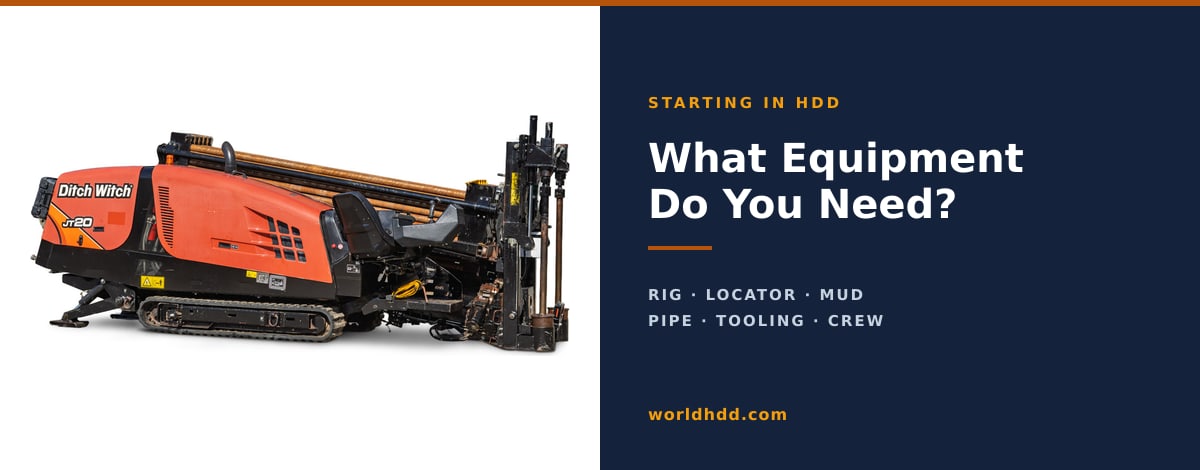
If you are a contractor weighing whether to move into directional drilling, the first thing to understand is that the drill is one piece of a seven-part operation. The rig gets the attention, but it is only about half the cost and, on its own, it cannot complete a single bore. This guide walks through what a complete HDD setup actually contains, what each part does and why it matters, the realistic way contractors grow into the business, and the operational reality (crew, training, insurance, permits) that the equipment lists leave out. It is the conversation a smart contractor wishes they had before deciding to enter HDD.
We sell and package this equipment for a living, so this is the dealer's-seat view, written to explain the business rather than to sell you a machine today. When you are ready to put dollar figures on a build, we have a separate guide that itemizes three complete packages with real pricing. This one is about the picture before the price tag: what you are really committing to, and how to start without overbuying.
The timing is worth a sentence. Federal broadband money is moving: the $42.45 billion BEAD program has cleared most of its approvals, fiber is still the majority technology funded, and the first projects are breaking ground in 2026. That is pulling a wave of new contractors toward HDD. If you are one of them, the goal of this article is to make sure you enter with eyes open.
The seven categories at a glance
Here is the whole operation in one table. The rest of the article explains each part and how to think about it.
| Category | What it does | Share of cost |
|---|---|---|
| Rig | Pushes, pulls, and rotates the drill string | ~50 to 60% |
| Locator system | Steers the bore; tracks the head underground | ~5 to 10% |
| Mud system | Mixes and pumps drilling fluid | ~8 to 15% |
| Drill pipe | The rods thrust through the earth | ~5 to 10% |
| Tooling | Bits, reamers, housings, swivels | ~3 to 7% |
| Trailer | Transports the rig and kit | ~5 to 10% |
| Ancillary | Anchors, hoses, fuel, spares, safety gear | ~2 to 5% |
Skip any of the first four and you do not have a working crew. Now the detail.
What HDD actually is
Horizontal directional drilling is a trenchless method for installing underground utilities, fiber, gas, water, electric, and sewer, without open-cut excavation. The operator drives a steerable drill head from a launch point, navigates it underground using a locator on the surface, exits at a target point, then pulls the product (cable or pipe) back through the bore on the return trip. Because almost nothing is dug up, HDD installs cleanly under roads, landscaping, and waterways, often faster than trenching.
A typical crew is two to three people: the operator running the rig, the locator walking the surface with a receiver to track and steer the head, and a laborer handling mud and hand work. Bore lengths range widely, from 50 to 300-foot residential fiber drops, to 300 to 1,000-foot distribution runs, to gas and utility crossings that can exceed 3,000 feet. If you want to go deeper on the discipline itself, the North American Society for Trenchless Technology is the industry's reference body. For this article, that is enough orientation; the point is that HDD is an operation, not just a machine.
Two decisions that drive everything else
Before any equipment list, two questions settle most of your downstream choices. Get these right and the rest of the kit almost specifies itself.
Decision 1: Scale (machine class)
| Class | Pullback | Typical work |
|---|---|---|
| Mini | 10,000 to 20,000 lb | Residential fiber drops, light utility |
| Utility-mid | 20,000 to 28,000 lb | Fiber distribution, mixed utility |
| Mid-heavy | 30,000 to 55,000 lb | Trunk fiber, utility infrastructure |
| Heavy | 60,000 lb and up | Gas main, large infrastructure crossings |
Decision 2: Work type
- Fiber and telecom: high bore count, short distances, residential and suburban. Mini or utility-mid class, a lighter mud system, emphasis on cycle speed.
- Mixed utility: distribution, service drops, water and sewer laterals. Utility-mid class, a mid-sized mud system, versatile tooling.
- Gas and power infrastructure: longer bores, higher pullback, often consolidated soil. Mid-heavy or heavy class, a robust mud system, hard-rock tooling.
The two interact: a fiber contractor does not need a heavy rig, and a gas contractor cannot work with a mini. For specific machine picks once you know your class and work type, see our guides on the best used drills for fiber contractors and Ditch Witch vs Vermeer.
The seven equipment categories
What each part does and how to think about it. This is the explanatory tour; for itemized pricing across three complete builds, see our complete HDD starter package guide.
1. The rig (directional drill)
The centerpiece: the machine that pushes, pulls, and rotates the drill string. Its class is set by the two decisions above, and it is roughly half to sixty percent of a complete package. What to settle now is the bore work you will do most. Do not buy a heavy rig to do fiber, and do not buy a mini if you know gas-main work is coming in year two. For picks by class and brand, see the best used drills for fiber contractors and Ditch Witch vs Vermeer; to read the hour meter on any used machine, see how many hours is too many.
2. Locator system
Without it you cannot steer the bore; you are drilling blind. It has three parts: a transmitter in the drill-head housing, a receiver the locator carries on the surface, and an in-cab display. The dominant brand is DigiTrak from Digital Control Inc., used with both rig brands; Ditch Witch also has its own SubSite line. One thing to know going in: locator generations are not fully cross-compatible, so a transmitter, receiver, and display all have to match. That matters most if you ever assemble a used system piecemeal.
3. Mud system
The fluid system mixes water with bentonite and polymer and pumps it down the drill string to lubricate, carry out cuttings, and stabilize the bore. You cannot drill without one, and it scales with rig class, from a skid-mounted small mixer for fiber-drop work up to truck-mounted systems for heavy work. Do not confuse a mud system with a vacuum excavator: the vacuum unit (used for potholing and spoil removal around buried lines) is a separate machine and a separate purchase, not part of the mud system. And do not over-economize here. According to a Vermeer and Pentair report in Trenchless Technology, roughly 70 percent of field mistakes trace to poor-quality drilling mud. Our used HDD mud system buyer's guide covers mixers, reclaimers, and how to tell the two apart before you buy one.
4. Drill pipe
The hollow steel rods that thread together to form the column thrust through the earth. A used rig comes with some pipe, and whether you need more depends on your longest bore. The dominant aftermarket brand is Premier Drill Pipe; OEM pipe (Vermeer Firestick, Ditch Witch) runs a premium. Used pipe condition matters: worn pipe is a day-ending failure underground, so it gets inspected like any other used component.
5. Tooling
The downhole parts on the leading end of the string: pilot bits matched to your soil, reamers in several sizes to enlarge the hole on pullback, bent housings that carry the transmitter, swivels rated to your pullback, and sub savers, the cheap replaceable thread protectors that, if neglected, can damage a whole set of rods. You start with a basic kit for the soils you will hit first and add specialty tooling (hard-rock, large-diameter) as jobs demand it.
6. Trailer
Transport for the rig and kit. Belshe is the dealer standard. The one rule that catches new entrants is rating: the trailer's GVWR has to exceed the loaded weight of the rig plus tooling with margin, so read the model specs rather than the model name. Contractors entering from an adjacent trade often already own a suitable trailer; verify the rating before assuming it.
7. Stakedowns and ancillary
The small items that make the crew operational on day one: ground anchors, fuel cans, water and hoses for mud, spare hydraulic hoses and sub savers, hand tools, and safety gear. Individually minor, collectively the most commonly underbudgeted line in the whole setup.
Ready to put dollars on it?
This article explains what each category does. Our complete HDD starter package guide itemizes three full builds (Entry, Recommended, Premium) with real used pricing and all-in totals.
Starter-size drills in stock
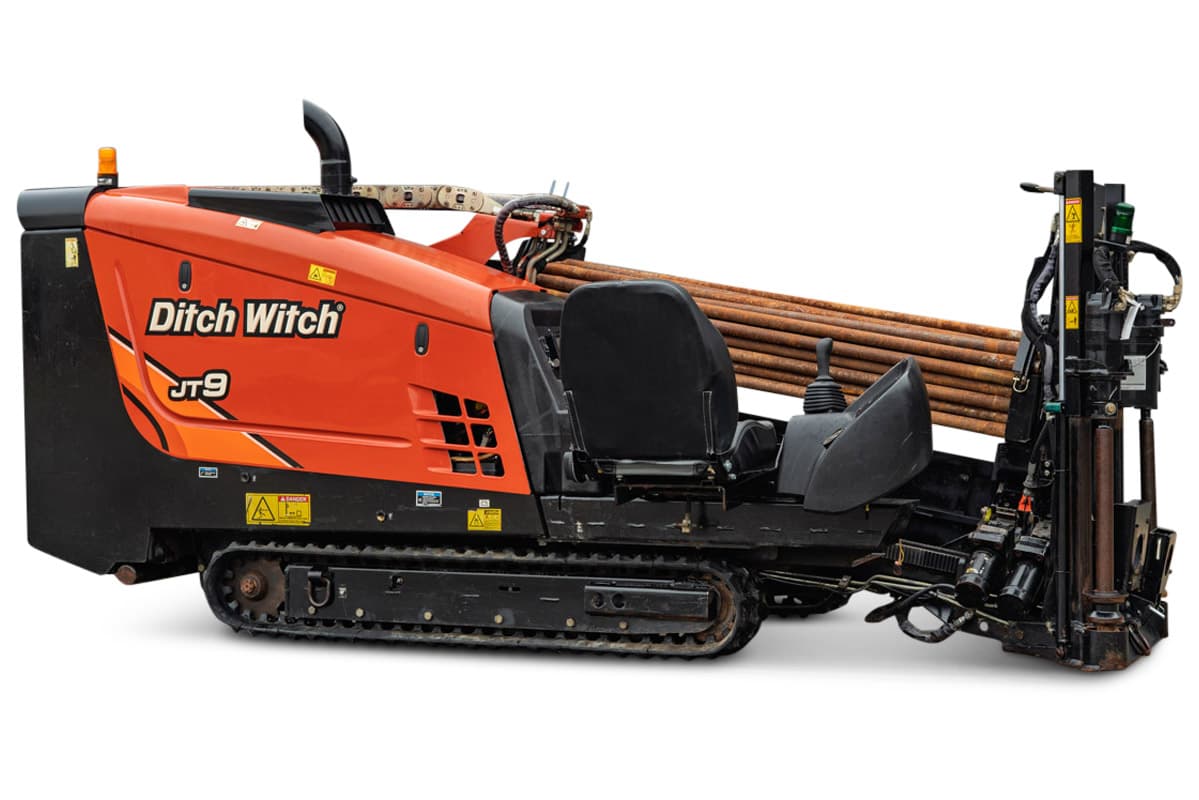
2016 Ditch Witch JT9
$79,000
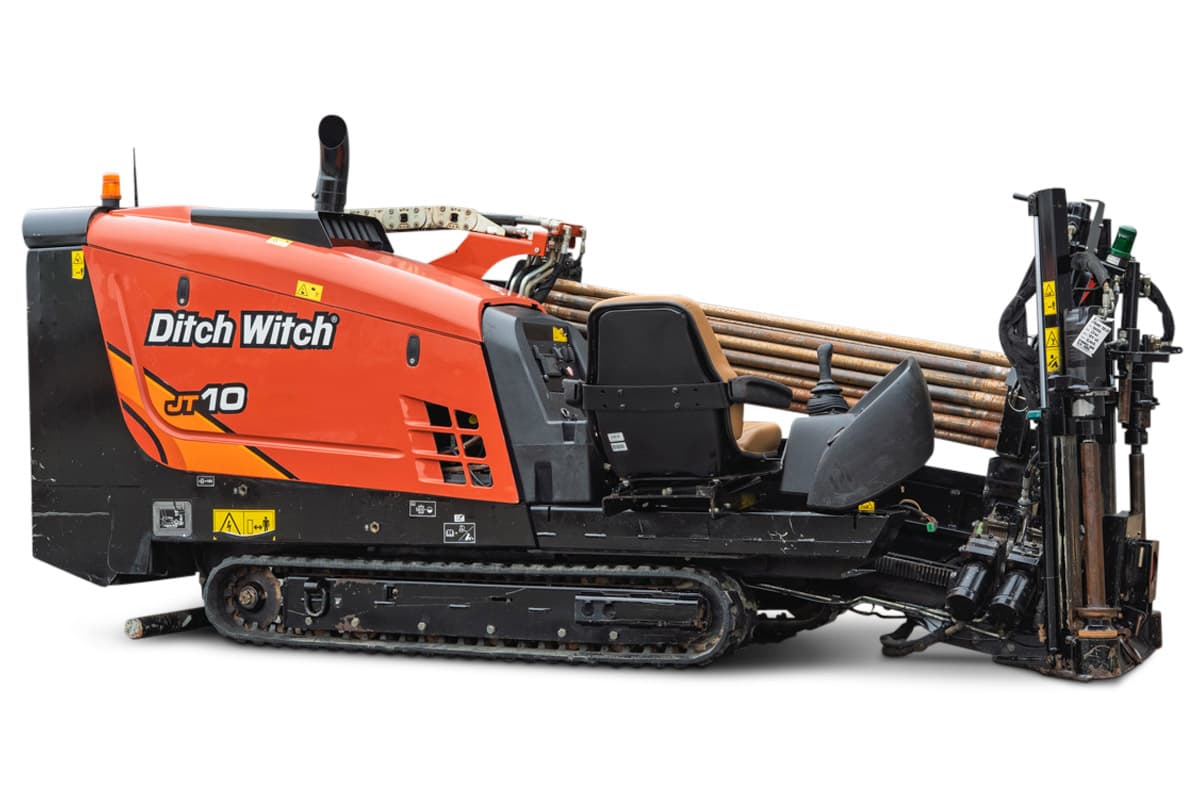
2022 Ditch Witch JT10
$99,000
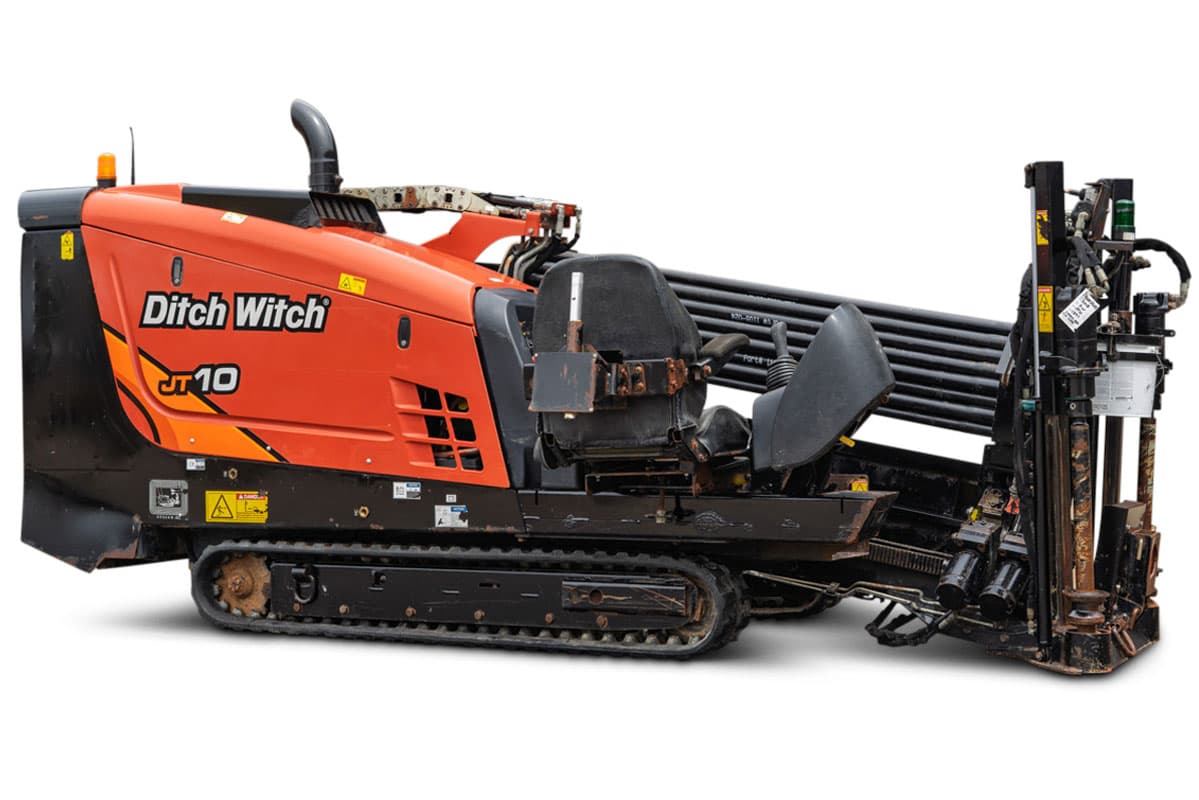
2018 Ditch Witch JT10
SALE PENDING
Want a quote today? Call (877) 288-0280.
How contractors actually grow into HDD
The most useful thing to know about entering this business is that almost nobody buys the whole kit on day one, and the ones who try usually buy the wrong size. Real entry is progressive.
Most HDD business founders were operators or locators first. They learned to run a bore before they learned to run a company. Dale Jenkins, who founded Southern Underground after roughly two decades in the field, put the timeline plainly in an interview with The Driller: "I set myself a goal to do it at the age of 40. I actually missed that mark by a few months." The lesson for a true newcomer is that the path is steeper than the generic "start a business" framing suggests, and that subcontracting first, or hiring experienced crew, is not optional polish; it is how you learn what your market actually needs before you spend six figures.
The five entry stages most contractors follow
1. Subcontract for an established HDD crew, ideally 6 to 12 months, to earn while you learn and build relationships. 2. Optionally rent or lease a rig to validate revenue before owning; our guide on whether to rent or buy your first directional drill works through the utilization math behind that call. 3. Buy your first machine, a minimal viable kit matched to your market. 4. Expand capability as work demands it: specialty tooling, a locator upgrade, a larger mud system. 5. Add a second crew and consider standardizing on one brand.
The single most expensive early mistake is buying a rig too large or too small for your local market, which only happens when you skip the subcontracting and market-research phase. The one caveat: BEAD-funded entrants chasing 2026 construction starts sometimes compress this ramp and buy a complete package up front. For everyone else, the lean ramp is still the right path.
Used or new for a first machine?
Most first-time buyers go used, and for good reason. A used entry package is a fraction of a new one, depreciates more slowly, and the established models (JT20, D10x15, JT24, D23x30) have deep parts and independent-service ecosystems and resell well. New makes sense in narrower cases: some BEAD-funded projects favor newer equipment for compliance, the highest-volume crews can justify a new warranty and lower downtime, and a few of the newest technologies are only available new for now. For a first machine, used is almost always the right call. The key is verifying condition, which is exactly what our inspection checklist and hours framework are for.
The operational reality the equipment lists leave out
Equipment is necessary but not sufficient. None of the following is the focus of this article, but pretending it does not exist is how new contractors get blindsided.
Training and credentials
There is no single national HDD license that authorizes you to operate, but several credentials carry weight with general contractors and project owners. The National Utility Contractors Association and NASTT both run trenchless and utility training. NCCER offers nationally recognized construction craft credentials (pipeline and pipefitting) that include HDD-related instruction, though there is no standalone NCCER HDD operator certification. OSHA 10-hour construction training is not federally mandated but is commonly required by GCs and several states. And if you haul a rig on a trailer with a combined gross combination weight rating over 26,001 pounds, which most loaded mid-class setups exceed, you need a commercial driver's license.
Permits and utility locates
Before any bore, an 811 one-call utility locate is legally required, typically with a few business days' notice depending on your state. Right-of-way permits from municipalities, state DOTs, or railroads are required for any bore crossing public infrastructure, and their lead time varies widely, from a few weeks to a couple of months, and is frequently the longest-lead item in starting a job.
Insurance
General contractors commonly require a $1 million general liability minimum, and many want $2 million or more in aggregate or umbrella coverage. Beyond general liability, HDD work needs inland marine or contractor's equipment coverage for rigs in transit and on site, and contractors pollution liability for drilling-fluid spills, because standard general liability policies exclude pollution. Workers' compensation is mandatory once you hire. Use a broker who knows trenchless work; generic contractor policies often carry HDD exclusions.
Crew and first jobs
A three-person crew, operator, locator, and laborer, is the practical minimum for most commercial work; a solo operation is not viable. And line up work before you buy iron. Most new contractors secure their first one to three contracts, often fiber subcontract relationships or small municipal jobs, before signing for equipment. Per-foot subcontract pricing is highly condition-dependent, commonly cited in the rough range of $15 to $50 a foot, dropping toward $15 to $25 in easy soil and climbing past $60 to $100 in rock or congested urban corridors. Know your local numbers before you commit.
Where to actually start
Three honest entry paths, depending on where you are starting from.
Path A: The capital-light entrant
Subcontract to an established crew for six to twelve months, build customer relationships, and use that time to settle your scale and work-type decisions. Then buy an entry-tier package with financing. This is the lowest-risk path and the one we recommend to most newcomers.
Path B: The funded entrant
You have a specific contract or a BEAD opportunity in hand, so the work scope drives the equipment list and may justify a fuller package from day one. Here financing is operationally central; you can apply through First Pacific Funding via WorldHDD, with a typical decision in 24 to 48 hours. For how that financing actually works, loan versus lease, realistic rates, and the tax angle, see our guide to financing used HDD equipment.
Path C: The adjacent-trade entrant
You are already in utility, fiber, or open-cut work and adding HDD as a service. You likely have a trailer, a crew, and a customer base, so your first incremental buy may be just the rig, locator, mud system, and a basic kit. Start from the fiber rig guide or the brand comparison depending on your work type.
The bottom line
Starting in directional drilling means buying an operation, not a machine. The rig is the centerpiece and about half the cost, but the locator, mud system, pipe, tooling, trailer, and ancillary kit are what turn it into a working crew, and the training, insurance, permits, and people are what turn the crew into a business. Settle your two decisions (scale and work type), grow into the equipment instead of overbuying on day one, and line up your first jobs before you sign for iron. Do that and you enter HDD with a real plan instead of a surprise.
Ready to put real numbers on a build? Start with our complete starter package guide. Want to talk through which path fits your situation? Talk to a WorldHDD specialist. You can also browse current inventory or look at financing when you are ready.
Frequently asked questions
Are a directional drill, a horizontal directional drill, and a directional boring machine the same thing?
For practical purposes, yes. Horizontal directional drilling (HDD) and directional boring describe the same trenchless method of installing utilities underground without open-cut excavation, and a directional drill or directional boring machine is the rig that does it. You will see all of these terms used interchangeably in the trade, by manufacturers, and in listings. There are technical distinctions in some contexts (very large bores, river crossings), but for a contractor entering residential and utility work, treat the terms as synonyms.
Do I need HDD experience before starting, or can I hire my way into it?
You need the experience on the crew, even if not in your own hands. Most successful HDD business owners ran bores for years before owning a company, and the ones who enter cold almost always either subcontract first or hire an experienced operator and locator. Running a bore is a skilled trade: misreading the locator or the mud can wreck a job or hit a utility. You can hire your way in, but you cannot skip the experience entirely. Plan to either learn it by subcontracting or pay for it in your first hires.
What does a locator do, and why does it need a dedicated person?
The locator tracks the drill head underground in real time, reading its depth, pitch, roll, and position from a receiver carried on the surface directly above the bore, and relays steering calls to the operator. It needs a dedicated person because the head moves continuously and someone has to walk the surface staying over it, interpreting the signal and watching for surface conditions, while the operator runs the rig. One person cannot both run the machine and walk the bore. That is why the minimum crew has a separate operator and locator.
Can I start without a yard or shop?
For a lean startup, often yes at first. Many small HDD operations begin by storing the rig and trailer on the owner's property or a leased lot and doing maintenance in the field or through a dealer, deferring a formal yard or shop until volume justifies it. What you cannot defer is secure storage for six figures of equipment and somewhere to keep mud, pipe, and tooling organized. A full shop is a growth-stage investment, not a day-one requirement, but plan for safe storage from the start.
What is the minimum crew size, and what does each person do?
Three people for most commercial work. The operator runs the rig, controlling thrust, pullback, and rotation. The locator walks the surface above the bore with a receiver, tracking the head and calling steering corrections in real time. The laborer handles drilling fluid, hand work at the entry and exit, and traffic control. Smaller residential jobs are sometimes run with two, but a three-person crew is the recognized minimum for safe, efficient commercial bores. A solo operation is not realistic for most paying work.
What certifications or licenses do I actually need before my first job?
There is no single national HDD operating license, but several things matter. An 811 utility locate is legally required before any bore. A commercial driver's license is required if your loaded rig-and-trailer combination exceeds a 26,001-pound gross combination weight rating, which most mid-class setups do. Most states require a contractor license for underground work, and general contractors commonly require OSHA 10 training and proof of insurance. Credentials from NASTT, NUCA, or NCCER are not legally mandatory but carry weight with project owners. Check your specific state and the requirements of whoever is hiring you.
Should I specialize in one type of work or offer everything from the start?
Specialize first. Your scale and work-type decisions drive your entire equipment list, and trying to serve fiber, utility, and gas at once means owning machines and tooling for all three before you have revenue from any. Most successful entrants pick the work their local market demands and their capital allows, usually residential fiber or mixed utility, and expand into adjacent work as relationships and cash flow grow. Breadth is a growth-stage advantage, not a startup strategy. Start narrow, get good, then widen.
What is the realistic timeline from deciding to enter HDD to my first commercial bore?
Plan on several months to a year for most contractors, and longer if you are learning the trade while building the business. The sequence (market research, business formation, financing, equipment acquisition, licensing, insurance, storage, and lining up first jobs) rarely compresses below a few months even at full speed. Adjacent-trade contractors who already have crew, trailer, and customers can move faster. BEAD-driven entrants with a contract in hand sometimes push hard for a sub-six-month ramp, but that takes a larger up-front capital commitment. Do not expect to decide today and bore next month.
How do I find my first jobs, do GCs hire HDD crews, or do I bid directly?
Both, and most new contractors start with the former. General contractors and larger HDD firms regularly hire crews as subcontractors, which is the most common entry point because it provides work without requiring you to win bids cold. As you build a track record you can bid directly, on utility and municipal projects through platforms like Dodge Construction Network and ConstructConnect, and on federal and BEAD-funded work through SAM.gov. The practical advice is to secure one to three contracts, often subcontract relationships, before you sign for equipment.
What happens if I hit an unknown utility during a bore, and how does insurance work?
Hitting an unmarked or mislocated utility is one of the most serious risks in the trade, which is why the 811 locate and careful tracking matter so much. If it happens, your general liability and, for fluid releases, your contractors pollution liability coverage are what respond, but only if you carry them and only if you followed the locate process; cutting corners on 811 can jeopardize a claim. This is exactly why HDD contractors carry higher limits than many trades and use brokers who understand trenchless risk. Treat the locate as non-negotiable and your coverage as essential, not optional.
Sources and references. Operational and industry claims were verified against the sources below in May 2026. Per-foot and timeline figures are condition-dependent industry ranges, not fixed quotes.
- North American Society for Trenchless Technology (NASTT)
- National Utility Contractors Association (NUCA)
- The Driller, "Dale Jenkins on Building a Business in HDD" (2021; practitioner-entry profile)
- FMCSA, Commercial Driver's License requirements (26,001-lb GCWR threshold)
- Call 811 (one-call utility-locate requirement before excavation)
- OSHA Outreach Training Program (10-hour construction)
- Trenchless Technology, "Drillmaster Report" (Vermeer and Pentair; source of the 70 percent mud-quality figure)
- Digital Control Inc. (DigiTrak locating systems)