
The number in your head is probably wrong, and it is usually wrong in the same direction. Owners anchor on what they paid, or on the highest asking price they ever saw for a machine like theirs, and then feel insulted by every real offer. Asking prices are not transaction prices, and your machine is not the one in the listing. This guide explains what actually moves the number on a used directional drill, what each selling channel really costs you, and what you can do in a fortnight to move the figure in your favour.
Our position, so you can weight it: we buy used rigs, we take them in trade, and we sell 57 directional drill listings. We benefit if you sell to us. That also means we look at this arithmetic every week, and the fastest way to lose a seller's trust is to lowball them with a straight face, so what follows is the same reasoning we use internally.
What actually moves the number
In rough order of how much each one swings the price.
Hours, and the shape of them
Hours are the first thing any buyer asks and the biggest single lever. But hours do not move price on a smooth curve, and they do not move it alone. Two examples from our own lot, both live as of August 2026 and both genuinely instructive.
Two 2013 Ditch Witch JT30 All Terrains: one at 3,670 hours asking $169,000, the other at 4,713 hours asking $108,000. Same year, same model, about a thousand hours apart, and sixty-one thousand dollars apart. That is what hours do at the point where a machine starts approaching major-service territory.
Now the counter-example, because this is where owners get misled. Two 2016 Ditch Witch JT25s, one at 2,542 hours and one at 4,392 hours, both asking $119,000. Nearly two thousand hours between them and no difference in the number. Condition, configuration, service history and what else comes with the machine absorbed the entire gap. Anyone who tells you there is an hours-to-dollars formula is selling you something.
Model year and generation, which are not the same thing
A newer machine is worth more with hours held equal, but the generation step inside a model line usually matters more than the year on the plate. This is where sellers most often misprice themselves, in both directions.
Watch what happens when you read a comp carelessly. On our lot there are two 2020 Vermeer D23x30DR S3 machines: 1,884 hours at $229,000 and 2,509 hours at $194,000. Read quickly, that looks like a very expensive D23x30. It is not. The DR suffix is a dual-rod machine, a different and dearer class than a standard D23x30, and most of that price level is the configuration rather than the year or the hours. A seller who prices a standard D23x30 against a dual-rod comp will sit unsold for months and never understand why.
Emissions tier, and what it does and does not mean now
Earlier industry analysis predicted Tier 4 machines would carry a residual discount against Tier 3, largely because export markets without ultra-low-sulfur diesel could not take them. That effect was real in the years right after Tier 4 Final arrived. By 2026 the used market has largely normalised, because Tier 4 machines are now most of what is available. What still moves your number is not the tier on the sticker but whether the emissions system is intact and functioning. A machine with a deleted or faulty aftertreatment system is a liability, not a bargain, and any buyer who knows the equipment will price it that way.
Maintenance records
The single cheapest thing you own that raises your number. A documented service history converts "this machine looks fine" into "this machine is fine", and it moves an offer because it removes the buyer's risk premium. Undocumented machines are priced for the worst plausible history, because that is the only rational way to price them.
Rack, pinion and thrust frame
This is the structural heart of the rig and the most expensive thing to put right. Wear here is what separates a high-hour machine that is worth buying from one that is worth parting out. It is also the check a serious buyer will make first, so there is no benefit in hoping it goes unnoticed.
Drill pipe
A complete string in serviceable condition can add meaningfully to a rig package, commonly in the range of $20,000 to $50,000 depending on diameter, thread specification and rod count. The real figure depends on inspection: buyers put calipers on the pipe and check outside-diameter wear against the OEM specification, and a tired string is a deduction rather than an addition. Our What Does HDD Drill Pipe Cost? Per-Rod and Full-String Pricing, Explained covers how pipe is valued inside a rig deal.
Locator and tooling
A working locating system of current vintage adds real value to a package and removes a sourcing job from the buyer's list, which is worth something on its own. We are not going to attach a dollar figure to it here, because it swings too much by model, generation and condition. If you are selling a rig with a Falcon system attached, say so early; it changes who is interested.
Geography
Freight is real money and it comes out of somebody's side of the deal. A machine two states from the buyer is worth less than an identical machine down the road, and a machine in a region where that model is in demand is worth more than the same machine somewhere it is not.
Is the 2026 market firm or softening?
Honestly: nobody can tell you precisely, and anyone quoting a confident percentage for HDD specifically is extrapolating. Industry data from 2024 showed significant year-over-year declines for common HDD models as inventory normalised after the post-COVID scarcity period. There is no consolidated public report for 2025 to 2026 that covers HDD as its own category, and general heavy-equipment indices do not disaggregate finely enough to be useful for a JT25.
What we can tell you is what we see: buyers are more selective about hours and documentation than they were two years ago, well-kept low-hour machines still move quickly, and tired undocumented machines sit. Treat the factors above as directional rather than as a formula, and get a current read on your specific machine rather than on your model in the abstract.
What drills like yours are listed at
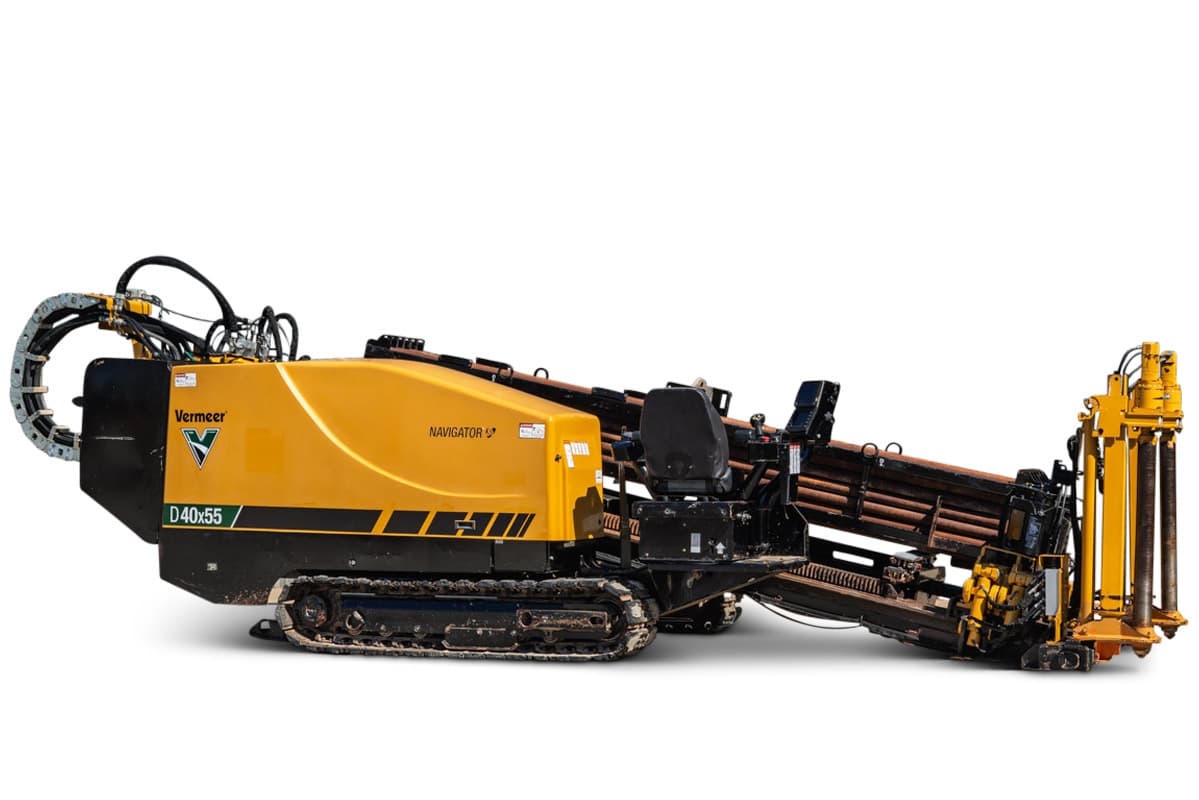
2021 Vermeer 40x55 S3
$299,000
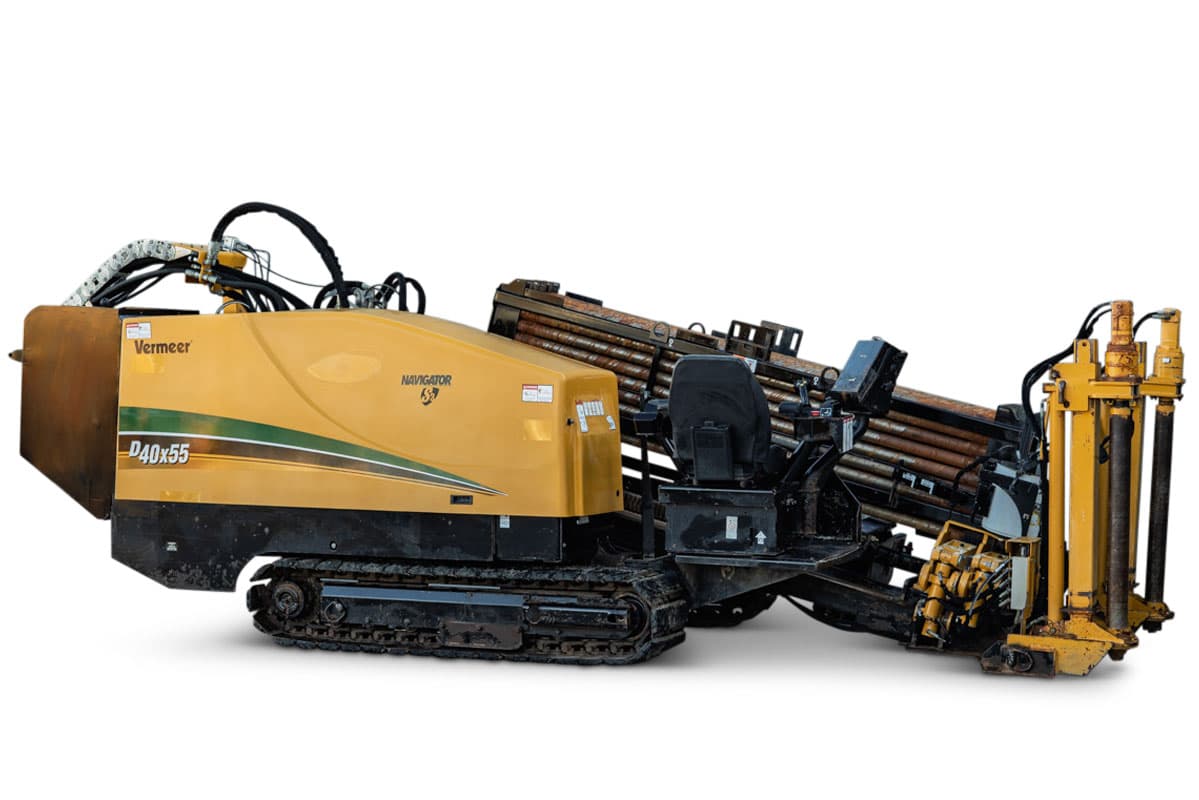
2019 Vermeer 40x55 S3
$199,000
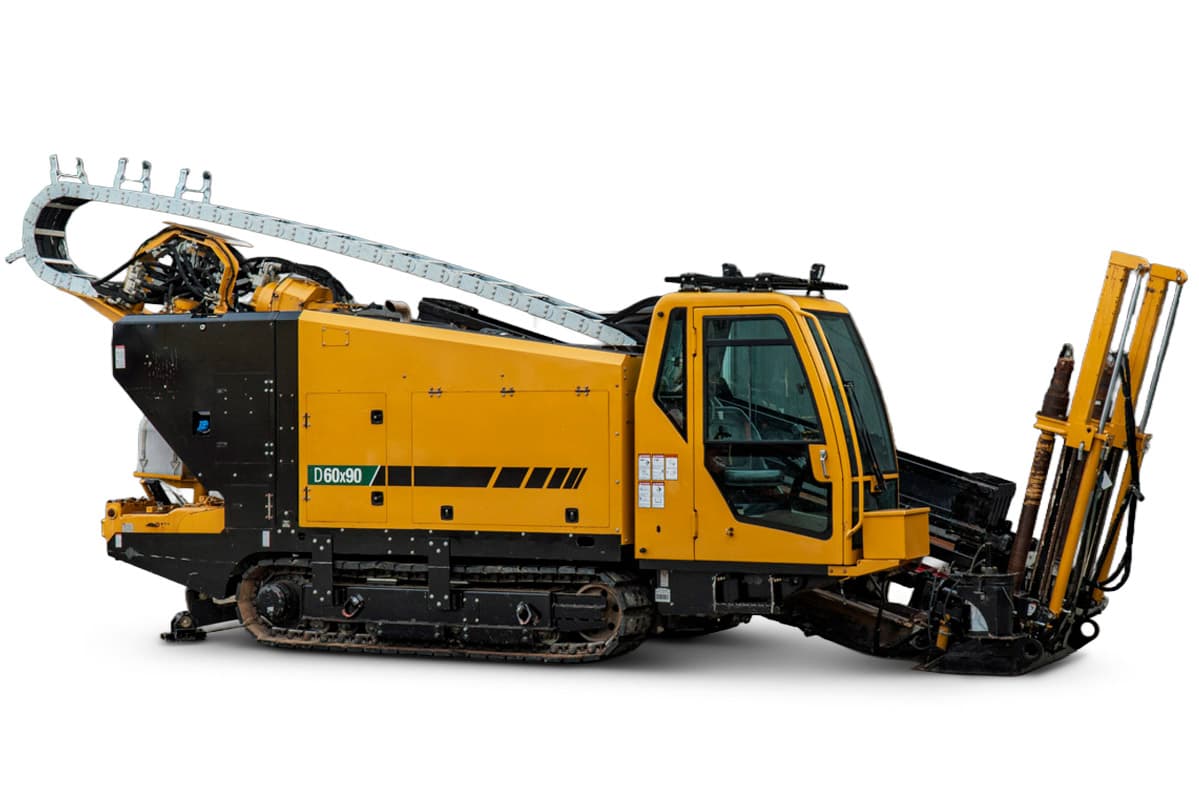
2020 Vermeer D60x90 S3
$469,000
Want a quote today? Call (877) 288-0280.
The four ways to sell, and what each one really costs
Every channel is the right answer for someone. Here is the honest version of each, including where our own channel is the wrong choice.
Auction
Speed and certainty of sale. You will convert to cash on a known date. That is genuinely valuable if you need the money on a schedule or are winding down.
What it costs. You accept whatever the room decides on the day, minus commission and fees, plus transport to the sale. A thin bidder turnout on your lot number is your problem, not the auctioneer's. Machines with strong documentation rarely get full credit for it in an auction format, because the format does not reward a careful story.
Right for: sellers who value a firm date over the last ten percent of value.
Private sale
The highest ceiling. No middleman, so the spread that a dealer or auctioneer would take stays with you. On a well-presented machine with records, this is the best number available.
What it costs. Time, and a lot of it. You field enquiries, most of which are not serious. You host inspections. You handle payment risk, transport logistics and the awkward conversation when a buyer finds something. And your machine is not working or sold while all that happens, which is a carrying cost people rarely count.
Right for: sellers with a genuinely good machine, complete records, and the patience to run a sales process themselves.
Consignment
A middle path. Someone else markets and shows the machine, and you keep more of the upside than an auction would leave you.
What it costs. You still carry the machine until it sells, with no date certain, and you pay a commission when it does. You are also trusting someone else's sales effort on an asset you still own.
Right for: sellers who want reach without running the process, and can wait.
Dealer trade-in or outright purchase
Speed, certainty and no process. One inspection, one number, one transaction. If you are trading up, the machine you are buying and the machine you are selling settle against each other on the same day, which removes a financing gap and a gap in your working fleet.
What it costs. The number is below what a patient private sale would achieve, because the dealer is taking on the carrying cost, the reconditioning, the marketing and the risk that the machine sits. Across heavy equipment generally, dealer offers tend to land somewhere in the region of 60 to 75 percent of comparable asking prices. That figure describes general dealer practice rather than any specific offer of ours, and the real number depends on your machine, current demand for that model, and what is already sitting on the lot.
Right for: sellers trading up, sellers who need the machine gone, and sellers who would rather run their business than run a sales process.
The comparison almost everyone gets wrong
Sellers compare a dealer's offer against asking prices they find online and conclude they are being lowballed. Those are not the same kind of number and they never were. An asking price is where a negotiation starts on a machine that has already been inspected, reconditioned, cleaned, photographed, listed and stood behind by somebody, and that somebody has been carrying it in the meantime. An offer on your machine is what it is worth before any of that work has happened to it. The honest comparison is your offer against what a private buyer would pay you today, minus the weeks you would spend getting there.
What to do in the two weeks before you sell
All of this is cheap, and all of it moves the number more than it costs.
Assemble the records. Every service invoice, every major repair, the hour-meter history. Put it in one folder. If you have gaps, say so rather than letting a buyer discover them.
Fix the small faults. Warning lights, a cracked screen, a leaking fitting, a missing guard. Individually trivial; collectively they tell a buyer the machine was not cared for, and that judgement gets applied to the parts they cannot see.
Clean it properly. Not cosmetics for their own sake. A clean machine lets an inspector see the condition, and an inspector who cannot see condition assumes the worst.
Sort the pipe. Count it, inspect it, and know its condition before someone else tells you. Present it as a known quantity rather than as an unknown attached to the deal.
Photograph it honestly and completely. Including the wear. A buyer who sees the problem in a photograph is negotiating; a buyer who finds it on arrival is walking away or re-trading the price from a position of advantage.
Know your comps before the call. Not the highest asking price you can find. The asking prices for machines with your year, your hours and your configuration. The tables below are a start.
What machines like yours are asking right now
These are live from our inventory as you load this page, not a snapshot. Read them as asking prices for inspected, reconditioned, dealer-listed machines, which is the ceiling of the range rather than the middle of it.
| Model | On our lot | Asking range |
|---|---|---|
| Ditch Witch JT10 | 4 listings | $84,000 to $99,000 |
| Ditch Witch JT20 | 10 listings | $79,000 to $189,000 |
| Ditch Witch JT25 | 6 listings | $98,000 to $189,000 |
| Ditch Witch JT30 | 6 listings | $108,000 to $199,000 |
| Vermeer D23x30 | 5 listings | $99,000 to $159,000 |
| Vermeer D24x40 | 7 listings | $99,000 to $294,000 |
Those ranges are wide on purpose, and the width is the lesson. A JT30 spans from a high-hour machine to a low-hour one, and where yours falls inside that band is decided by exactly the factors above. If you want to see how the hours effect works inside a single model, How Many Hours Is Too Many on a Used Directional Drill? works through it in detail.
Rolling your rig into the next one
If you are replacing rather than exiting, the trade is usually the better transaction even when the headline number is lower than a private sale would fetch. Three reasons, and only one of them is convenience.
The first is timing. You do not have a gap where the old machine is sold and the new one is not yet financed, or a gap where you own two machines and are paying for both.
The second is that the spread is what matters, not the trade figure. A slightly lower trade-in against a slightly better price on the machine you are buying nets out the same, and it is one negotiation instead of two.
The third is that a trade puts your machine in front of someone who already knows what it is worth to the next owner, which tends to produce a more sensible number than a stranger guessing.
If you are working out which machine to move up to, Directional Drill Sizes Explained: What Size Do You Actually Need? is the sizing question, and How to Finance Used HDD Equipment: Loans, Leases, Rates, and Section 179 covers the money side. Financing runs through First Pacific Funding for qualified buyers; we do not lend ourselves. Pre-approval does not affect your credit score and typically takes 24 to 48 business hours, and neither approval nor rates are ever guaranteed. Section 179 may apply in the year you place equipment in service; consult your CPA, as this is not tax advice.
Frequently asked questions
How much is my used directional drill worth?
It depends on hours, year and generation, structural condition of the rack and thrust frame, emissions system integrity, documentation, what pipe and tooling come with it, and where it sits geographically. There is no formula, and the same model at the same hours can differ by tens of thousands of dollars on condition and records alone. The practical route is to compare against asking prices for machines matching your year, hours and configuration, then subtract for the fact that an asking price is a reconditioned dealer-listed number rather than a private-party one. Or send us the details and get a real figure.
Why is a dealer's offer lower than the asking prices I see online?
Because they are different kinds of number. An asking price is for a machine that has already been inspected, reconditioned, cleaned, photographed, listed and stood behind by somebody, and it is a starting point for a negotiation. An offer on your machine is what it is worth before any of that work has happened, and it accounts for the carrying cost and the risk that the machine sits. Across heavy equipment generally, dealer offers tend to fall in the region of 60 to 75 percent of comparable asking prices, though the real number depends entirely on the machine.
Do hours or year matter more?
Hours, usually, but neither works alone. On our lot two 2013 JT30 All Terrains about a thousand hours apart are separated by $61,000, which is the hours effect at its starkest. But two 2016 JT25s nearly two thousand hours apart are both asking $119,000, because condition and configuration closed the gap entirely. Generation matters more than the model year within a line, and configuration can outrank both, which is why a dual-rod machine should never be compared against a standard one.
Does a Tier 4 machine sell for less than a Tier 3?
Less than the older analysis suggested. The predicted discount was real in the years right after Tier 4 Final arrived, driven largely by export markets that could not take the machines. By 2026 the market has largely normalised, because Tier 4 machines are most of the available inventory. What still costs you money is a compromised or deleted aftertreatment system, which is a liability to any buyer who understands the equipment.
Should I sell my drill pipe with the rig or separately?
With the rig, in almost every case. A complete serviceable string can add materially to a package, commonly $20,000 to $50,000 depending on diameter, thread specification and count, and a buyer paying for a rig is the buyer most motivated to pay for matching pipe. Selling it separately means finding a second buyer for something that trades thinly on its own. Do have it inspected and counted first, because a tired string presented as an asset becomes a deduction the moment someone puts calipers on it.
Is it worth fixing things before I sell?
Small things, yes, almost always. Warning lights, leaks, a cracked display, missing guards: these cost little and their absence tells a buyer the machine was neglected, a judgement that then gets applied to everything they cannot inspect. Major repairs are a different calculation and usually not worth it, because you will rarely recover the full cost of a big job in the sale price. Disclose those instead and price accordingly.
How long does a trade-in take?
Once we have the details and photographs, an initial figure is usually a same-day conversation. Completing it depends on inspection and on what you are trading into. The advantage over a private sale is not only speed but certainty: you know the number and the date rather than waiting to find out whether a buyer materialises.
What information should I have ready?
Year, make, model and the exact configuration including any suffix such as DR or AT, current hour-meter reading, service records, a truthful account of any known faults, the pipe count and its condition, what tooling and locating equipment is included, and where the machine is located. That is a complete picture, and a complete picture gets a better number than a partial one, because the missing pieces are always priced pessimistically.
Want a real number instead of an estimate? Tell us what you have with the hours, the records and a few honest photographs, and we will come back with a figure and the reasoning behind it. If you are trading up rather than selling out, say what you are looking at as well and we will price both sides together, which is usually the better deal. You can also call (877) 288-0280, or browse what is on the lot to see what your machine would be sitting next to.
Sources and references. Asking prices and machine comparisons come from WorldHDD's own live inventory. No auction house, marketplace or competing dealer is cited, and no depreciation percentage is quoted that we cannot stand behind for HDD specifically.
- WorldHDD used directional drill inventory, for all asking prices and machine comparisons
- How Many Hours Is Too Many on a Used Directional Drill?, for the hours-to-condition relationship in detail
- The Used Directional Drill Inspection Checklist, for what a buyer will inspect on your machine
- What Does HDD Drill Pipe Cost?, for how pipe is valued inside a rig deal